Short answer
An owner's project manager works for you, not the contractor or designer. On small and mid-sized capital projects you need one when nobody on staff has the time or construction experience to define scope, run procurement, control cost and schedule, manage risk and make decisions quickly. The fee is a small share of the budget; a drifting project is not.
You have approval for a capital project: a new roof and boiler plant, a library expansion, a fire alarm replacement across three buildings, a wharf repair. The money is real, the deadline is real, and the person expected to deliver it is you, on top of your actual job. The question is not whether the project will be managed. It is whether it will be managed by someone with the time and experience to do it, or by whoever is standing closest when things go sideways.
This article is about owner-side project management on small and mid-sized capital projects: what the role is, when it earns its keep, and how to tell if you need it.
What does an owner’s project manager actually do?
An owner’s project manager (sometimes called an owner’s representative, or owner’s rep) is hired by and accountable to the owner alone. The architect designs. The contractor builds. The owner’s project manager makes sure the project the owner approved is the project that gets delivered, on the budget and schedule that were promised.
In practice that means:
- Defining the project. Turning a rough idea (“we need more beds”) into a written scope, a realistic budget with contingency, and a schedule that respects your operations, your funding deadlines and the season.
- Assembling the team. Writing terms of reference, selecting consultants, and setting up contracts so everyone knows who answers to whom.
- Procurement. Choosing the right contracting method, preparing tender documents, running the tender, analyzing bids and recommending award.
- Cost and schedule control. Tracking commitments against budget, reviewing progress claims, assessing change orders before they are approved, and reporting in plain language to the board, council or executive.
- Risk management. Identifying what could go wrong (unknown site conditions, long-lead equipment, an occupied building, a funding clawback date) and putting a plan around each one before it happens.
- Closeout. Deficiencies, commissioning, warranties, as-built records, and the final accounting your funder will ask for.
Formal project management practice treats these as distinct knowledge areas. Applying them on a small project is not ceremony. It is making sure none of them gets skipped because the project was “too small to bother”.
When does a small project need one?
Honest answer: not always. If your organization has a facilities director who has delivered a dozen similar projects and has the hours to spare, you may be fine. The role earns its fee in situations like these:
| Situation | Why it matters |
|---|---|
| Nobody on staff has run a construction project before | The learning curve is paid for in change orders |
| The project manager is also the CEO, principal or executive director | The project gets attention only in a crisis |
| The building stays occupied during the work | Phasing, shutdowns and life safety need daily coordination |
| Funding comes with deadlines or reporting conditions | A missed milestone can cost more than the fee |
| The project involves several disciplines | Somebody has to own the interfaces |
| A board or council needs regular, defensible reporting | Decision-makers need numbers they can trust |
| The project is unusual for your organization | One-off projects have no institutional memory to draw on |
Small and mid-sized projects are, if anything, more exposed than large ones. A $50 million project gets a full-time team and a contingency line that can absorb surprises. A $900,000 project often gets a committee and a hope.
Where do small projects go wrong?
Most of the trouble we see on small projects was baked in before the first shovel.
A scope that was never written down
“Replace the boilers” is not a scope. Does it include the controls? The chimney liner? The electrical service that turns out to be undersized? Each unwritten assumption becomes a negotiation with the contractor later, when you have the least leverage.
A budget that was set before anyone looked at the site
Budgets set by rule of thumb, or by a quote from three years ago, tend to be wrong in one direction. An owner’s project manager will push for a proper class estimate once the scope is defined, and will insist on a contingency sized to the real uncertainty (older buildings and occupied facilities carry more).
A tender that was rushed to meet a funding date
A tender issued with incomplete drawings gets priced with risk built in, or gets priced low and clawed back through changes. Either way the owner pays. Sometimes the right call is to negotiate the deadline with the funder rather than tender a half-finished design.
Decisions nobody was empowered to make
Contractors need answers in days, not at the next monthly board meeting. A project manager with delegated authority, and a clear line to the person who holds the rest, keeps the site moving.
What should you ask before hiring one?
A short checklist for interviewing an owner’s project manager or firm:
- Who exactly will be assigned to our project, and what have they delivered at this scale?
- Do you hold PMP certification or equivalent, and how do you apply it to a small project without burying us in paperwork?
- How will you report cost and schedule to us, and how often?
- How do you handle change orders: who reviews, who approves, what is the turnaround?
- Can you provide the engineering disciplines we will need, or will you coordinate outside consultants?
- What happens if the project needs more of your time than the proposal assumed?
- Can we speak with two owners you have done this for?
The last question matters most. A project manager’s references will tell you whether they protected the owner or simply attended meetings.
What this looks like in practice
Two projects from our own files show the range.
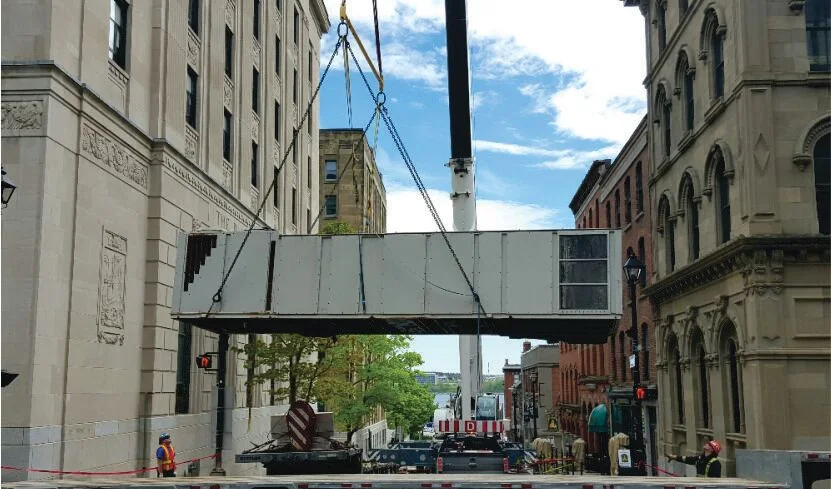
At the Hollis Street Scotiabank in Halifax, a 1931 heritage building, the work started with a feasibility study in 2015, then moved into design in 2015 and 2016. The scope included converting the oil-fired boiler plant to natural gas, new rooftop HVAC equipment and roof work, with architectural, mechanical, electrical and structural design under one roof. Our team also carried the project management. Having the designers and the project manager in the same firm meant that when a question came up about routing a gas service through a heritage structure, the answer came from down the hall, not from a two-week round of emails.
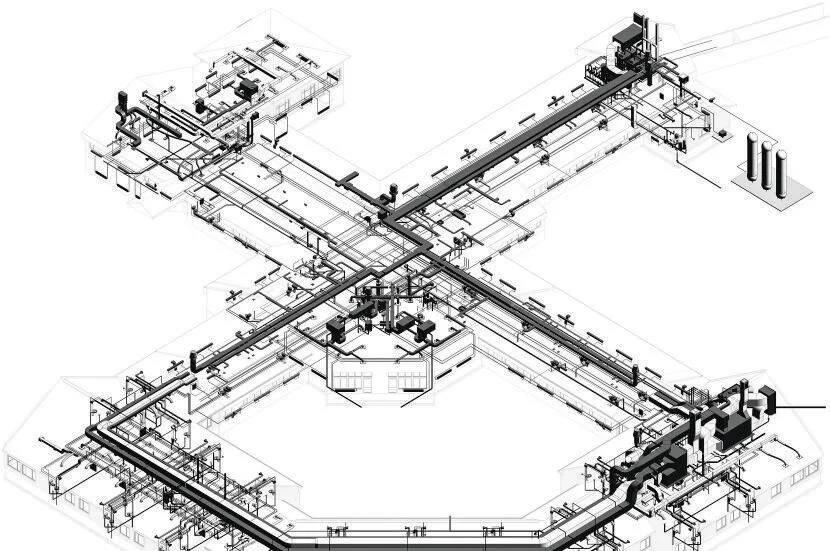
At the Kiwanis Nursing Home expansion in Sussex, delivered between 2014 and 2016, the project added 30 geriatric beds and 35 enhanced-care beds to an operating facility. Our mechanical and electrical team modelled the services in Revit BIM to catch clashes before they reached the site, and the scope ran all the way to the nurse call system. Occupied healthcare buildings are exactly the kind of project where coordination is the whole game: every shutdown, every noisy phase, every life safety system that has to stay live while its replacement is installed.
How does project management fit with engineering?
Engineering firms are not the only source of owner’s project managers. The advantage of a firm that also carries project management as a discipline alongside mechanical, electrical, geotechnical and environmental engineering is the short loop between a problem and a qualified answer. When a bid comes in over budget, the people who can redesign the system to fit are already in the room. When a site condition turns up, the geotechnical team can look at it the same week.
That is also why the choice of firm matters as much as the choice of role. Our guide on choosing an engineering consultant in Atlantic Canada covers the questions to ask. If your project involves an older building, the article on HVAC upgrades in heritage buildings shows what the coordination problems look like up close.
The bottom line
Small and mid-sized capital projects fail for small, avoidable reasons: a scope nobody wrote down, a budget nobody tested, a tender nobody had time to check, a decision nobody was allowed to make. An owner’s project manager exists to close those gaps on your behalf. If nobody on your team can honestly say they have the hours and the experience to do that, price the role before you price the project.
Key takeaways
- The owner's project manager is the only party on a construction project whose sole job is protecting the owner's interests.
- Most schedule and budget trouble on small projects starts before construction, in a loose scope, an unrealistic budget, or a rushed tender.
- A PMP-led process (scope, schedule, cost, risk, procurement) scales down to a $500,000 renovation just as well as it scales up.
- The best time to bring in owner-side project management is before the design team is hired, not after the first change order.
- Combining project management with in-house engineering shortens the loop between a question and an answer.
Questions we get asked
What is the difference between an owner's project manager and a construction manager?
A construction manager runs the building work and usually sits on the contractor's side of the table, or acts as a hybrid under a construction management contract. An owner's project manager represents only you: defining the scope, selecting consultants and contractors, tracking cost and schedule, reviewing changes and reporting to your board or council. The two roles can coexist on one project, but they are not interchangeable.
How much does owner's project management cost?
Fees vary with project size, duration and how much of the work you want handled. They are typically a small percentage of the construction budget, or an hourly or monthly retainer for part-time involvement. Ask for a fee proposal tied to a clear scope of services so you can compare it against the cost of your own staff time and the cost of a project that overruns.
Can an engineering firm act as my owner's representative on a project it also designs?
Yes, and it is common on small and mid-sized projects where hiring two separate firms is not practical. The arrangement should be written into the agreement, with clear responsibility for design decisions, cost reporting and change review. Many owners find it efficient because the people managing the project can get technical questions answered in the same office.
At what project size does an owner's project manager make sense?
There is no fixed threshold. The better question is whether anyone on your team has the time and experience to manage the project properly. A $400,000 mechanical upgrade in an occupied building can need more coordination than a $3 million new build on a clear site. If the answer is no, or if the project is unusual for your organization, a part-time owner's project manager is worth pricing.
What does a project manager do during the tender and procurement stage?
They prepare or review the tender documents, choose the procurement method (public tender, invitational tender, request for proposals or construction management), set evaluation criteria, run the bidder questions and addenda, analyze the bids and recommend an award. On public-sector work they also make sure the process complies with your organization's procurement policy and any trade agreement obligations.