Short answer
Choose an engineering consultant on the people who will do the work, their record on projects like yours, their provincial licence, their QA process and insurance, and how they communicate, before you look at price. Qualifications-based selection, ranking firms on competence then negotiating fee with the top one, is what ACEC and the Federation of Canadian Municipalities recommend.
You have a project that needs an engineer: a subdivision, a solar farm, a building retrofit, a wharf, a contaminated site. You have a list of firms, maybe a procurement policy, and a deadline. The decision will affect the project for years, and most people make it with less information than they would use to buy a truck.
This article sets out how to choose an engineering consultant in Atlantic Canada: what to ask, how to run the selection, and why the structure of the firm, not just the names in the proposal, is worth your attention. We are a consulting firm, so read it with that in mind.
Why does the choice matter more than the fee?
Engineering fees are a small slice of a capital project. The decisions those fees buy (the foundation type, the mechanical system, the permitting strategy, the site layout) set the construction cost, the operating cost and the permitting timeline for the life of the asset. A firm that saves you a few thousand dollars on the fee and costs you a season on a permit was not the cheap option.
This is why the Association of Consulting Engineering Companies of Canada (ACEC) and the Federation of Canadian Municipalities, through the InfraGuide best practice on selecting a professional consultant, recommend qualifications-based selection (QBS) over price-based selection for professional services. In QBS you rank firms on the proposed team, relevant experience and their understanding of and approach to your project, then negotiate scope and a fair fee with the top-ranked firm. If you cannot agree, you move to the next one.
QBS is a way to agree on what you are buying before you agree on what it costs.
What should you ask a prospective engineering consultant?
A checklist we would want to be asked:
- Who will work on our project? Names, roles, their availability and their experience on comparable work. The proposal should commit the people, not just the firm.
- Show us three projects like ours. Same type, similar scale, same region if possible, with references you can call.
- Are you licensed here? The individual engineers and the firm must be registered with the provincial regulator (APEGNB in New Brunswick, Engineers Nova Scotia, Engineers PEI, PEGNL in Newfoundland and Labrador). Projects that cross into Maine or Alberta need licensing there too.
- How do you check your own work? Ask about the quality management system and whether every deliverable is reviewed by a registered professional who did not produce it.
- What insurance do you carry? Professional liability and general liability, with limits stated and a certificate available.
- Which disciplines are in-house, and which are subcontracted? Neither answer is wrong, but you should know who is accountable for what.
- Who owns the firm? Local partners, employees, a national parent, a private equity fund. Ownership tells you where decisions are made and whose reputation is at stake.
- How will you communicate? Reporting frequency, who you call with a problem, and how fast a question gets an answer.
- What will go wrong? A good consultant has an opinion about the risks on your project before being hired. A vague answer is informative.
- What do you need from us? Firms that ask for site access, records, drawings and decisions up front are planning the work. Firms that do not ask are planning to ask later.
How do you compare firms fairly?
A simple scoring matrix keeps the discussion honest, especially when a board or council is involved.
| Criterion | What good looks like | Suggested weight |
|---|---|---|
| Proposed team | Named, available, experienced on this type of work | 30% |
| Relevant experience | Comparable projects, regional, with references | 25% |
| Understanding and approach | Identifies the real risks, proposes a credible method and schedule | 25% |
| Capacity and disciplines | Can deliver the full scope, with clear accountability for any subconsultants | 10% |
| Quality, licensing and insurance | Documented QA, registered, insured | 10% |
Decide the weights before the proposals arrive, not after you have a favourite. If your procurement policy requires a price component, keep it a minority of the score and require a detailed fee breakdown so you are comparing the same scope.
Why does “multidisciplinary” matter?
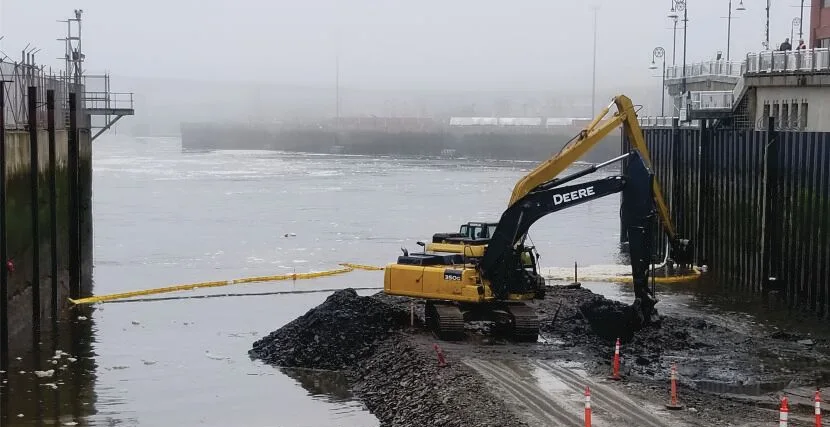
Most projects are not one problem. A solar farm is a permitting problem, a geotechnical problem, a stormwater problem and an electrical problem. A wharf is marine structures, geotechnical, Fisheries Act permitting and a survey.
When those disciplines live in different firms, the owner becomes the integrator, whether or not they wanted the job. Interfaces get missed. Schedules drift because the geotechnical report arrives after the structural design started.
When the disciplines live in one firm, the loop between a site problem and a design answer is a conversation down the hall. There is one party accountable for the whole, one contract, one set of invoices. For very specialized work a dedicated specialist is the right call; for the broad run of small and mid-sized projects in this region, one firm is the efficient one.
Why does employee ownership matter?
Over the last two decades, most of the original full-service consulting firms in New Brunswick have been bought by national or international groups. Scale brings resources, but it changes who makes decisions and why.
In an employee-owned firm, the senior engineer reviewing your drawings has a stake in the firm’s reputation that does not expire at the end of the quarter. Decisions about staffing and priorities are made by people who live where you do and will see you at the hardware store. Staff tend to stay, so the person who understood your project in year one is still there in year three.
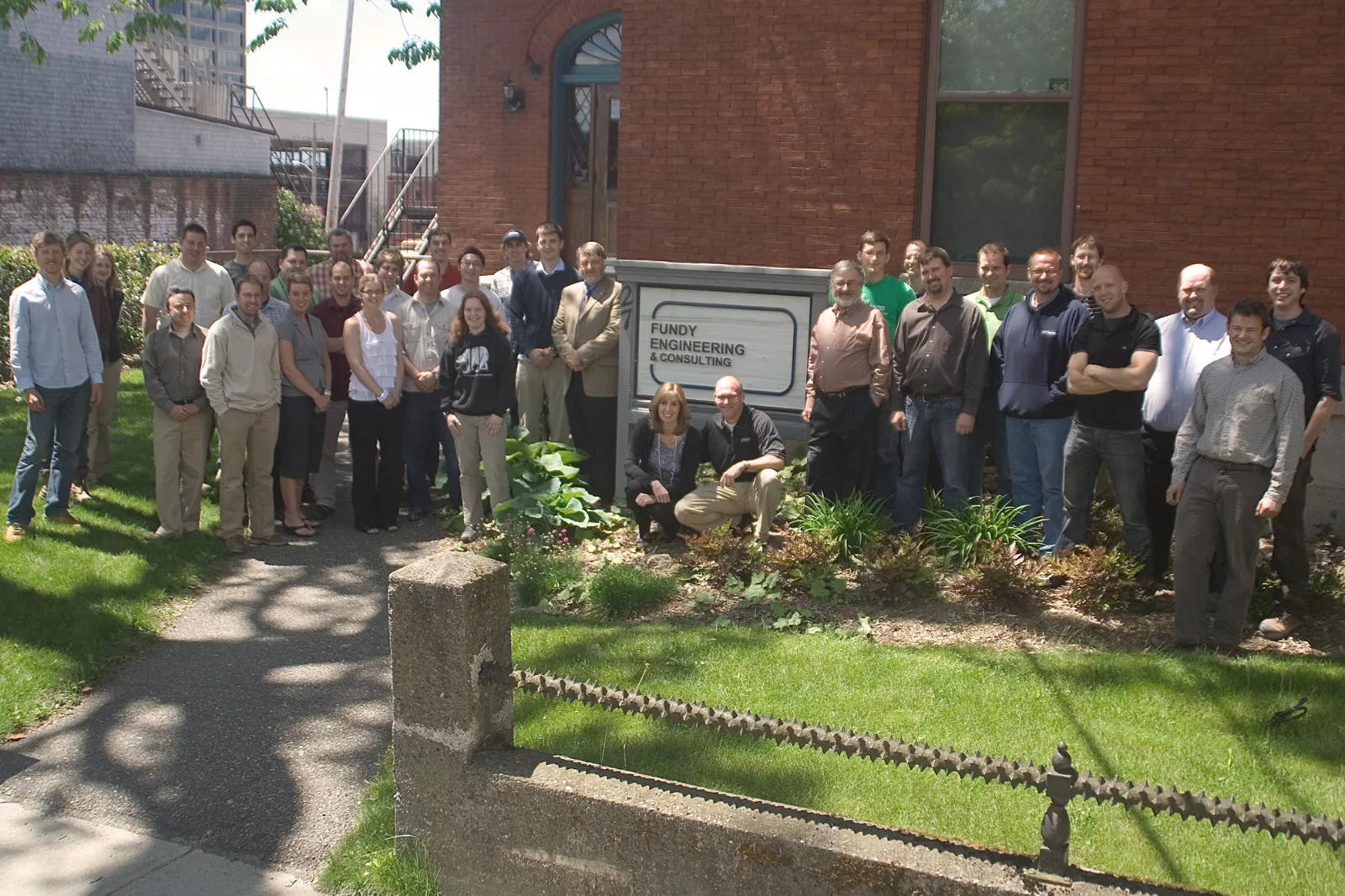
Fundy Engineering is one of the few original New Brunswick full-service multidisciplinary firms that has not been acquired. We were founded in 1989 and are employee-owned, and we say so in proposals because we think it is relevant to the question of who you want in your corner. Judge it as one factor among several.
What this looks like in practice
Three projects show what a multidisciplinary, regionally rooted firm looks like from the client’s side.
For C2 Solar’s Violet Solar Farm at Brunswick Mills, New Brunswick, a 10 MW project with 31,200 panels on 40 hectares, the approvals were the critical path. The project exceeded the 3 MW threshold that triggers Environmental Impact Assessment registration in New Brunswick. Registration went in July 2019, approval came in February 2020, and the work earned an ACEC-NB Engineering Excellence award in 2020. Knowing the provincial process and the reviewers’ expectations is what keeps an approval to seven months.
For the Kennebecasis Valley Library expansion in Quispamsis, working with Richard & Co. Architecture between 2011 and 2013, our building systems team delivered the full mechanical and electrical design, including hydronic in-floor heating, radiant panels and solar water heating. The project earned an Efficiency NB award and Green Globes recognition. One team, one scope, one accountable party for everything behind the walls.
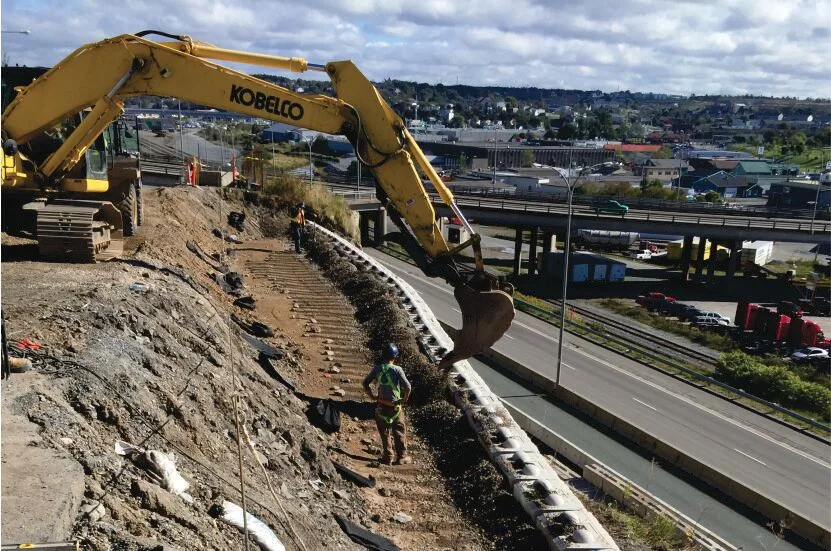
For the City of Saint John, the Wright Street rock wall failure in 2013 and 2014 needed geotechnical assessment, a 3D survey of a 100-metre stretch of 16-metre rock face, a diagnosis (freeze-thaw weathering) and a fix (scaling, rock anchors and a precast Redi-Rock wall). A firm that has worked on these slopes for decades starts with that knowledge instead of acquiring it on your budget.
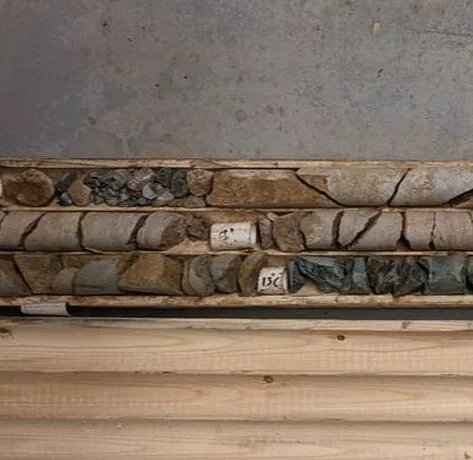
Each of these drew on our project management discipline alongside the technical work. If your project is small enough that you are wondering whether you need owner-side help at all, the article on owner’s project management for small and mid-sized capital projects is the companion to this one. And if the first thing your consultant should do is look at the ground, what a geotechnical investigation tells you explains why.
The bottom line
Choose an engineering consultant the way you would choose a surgeon: on who will do the work, what they have done before, and whether they will tell you the truth, with fee negotiated once you know what you are buying. In Atlantic Canada, add two questions that national procurement templates tend to leave out: do they know this ground and these regulators, and who actually owns the firm?
Key takeaways
- The engineering fee is a small share of a project's lifetime cost; the quality of the engineering decides most of the rest.
- Ask who will be on your project, not who is on the firm's website.
- Qualifications-based selection is the method ACEC and FCM recommend for hiring professional services.
- A multidisciplinary firm shortens the loop between a site problem and a design answer, and gives you one accountable party.
- Employee ownership means the people making decisions about your project are the same people whose names and reputations are on it.
Questions we get asked
What is qualifications-based selection (QBS) for engineering services?
QBS is a procurement method where you evaluate and rank consultants on their qualifications: the proposed team, relevant experience, and their understanding of and approach to your project. You then negotiate scope and a fair fee with the top-ranked firm, moving to the next firm only if you cannot agree. The Association of Consulting Engineering Companies of Canada and the Federation of Canadian Municipalities recommend it over price-based selection for professional services.
How do I check whether an engineering firm is licensed in my province?
Each province's regulator keeps a public register. In New Brunswick it is the Association of Professional Engineers and Geoscientists of New Brunswick (APEGNB), in Nova Scotia it is Engineers Nova Scotia, in PEI it is Engineers PEI, and in Newfoundland and Labrador it is PEGNL. Both the individual engineers and the firm itself need to be registered or hold a certificate of authorization to practise, so check both.
Should I hire a local firm or a national one?
Hire the firm with the right people for your project. Local firms tend to know the soils, the tides, the regulators and the contractors, and your project is a larger share of their attention. National firms bring scale and specialist depth for very large or unusual work. For most small and mid-sized projects in Atlantic Canada, a regional multidisciplinary firm is the practical fit; for a billion-dollar industrial expansion, you may want both.
What insurance should an engineering consultant carry?
Professional liability (errors and omissions) insurance and commercial general liability insurance, with limits appropriate to your project. Ask for a certificate of insurance, confirm the policy is current and ask whether it is a per-claim or aggregate limit. Public-sector clients often set minimums in their standard terms; private clients should set their own.
Why does it matter whether an engineering firm is employee-owned?
Ownership shapes behaviour. In an employee-owned firm, the engineers and technologists reviewing your drawings have a direct stake in the firm's reputation and continuity, and decisions are made locally rather than at a head office in another time zone. It also tends to mean lower staff turnover, so the person who started your project is more likely to finish it. It is not a guarantee of quality, but it is a signal worth weighing.