Short answer
A project needs EIA registration in New Brunswick if it is listed in Schedule A of the EIA Regulation (87-83) under the Clean Environment Act. Common triggers include power generation of 3 MW or more, wetland impacts of 2 hectares or more, waterworks over 50 cubic metres per day, and all waste and sewage facilities. Approval must come before construction.
You have a site, a concept and a financing window, and someone has just asked whether the project “needs an EIA.” The honest answer in New Brunswick is: it depends on whether your project matches a line in Schedule A of the Environmental Impact Assessment Regulation, and the sooner you check, the fewer surprises you will have later.
This guide walks through the triggers, the process, the realistic timeline and what the reviewers are actually looking for.
What triggers an EIA in New Brunswick?
New Brunswick’s EIA process is set out in Regulation 87-83 under the Clean Environment Act and administered by the Department of Environment and Local Government (DELG). The regulation lists undertakings that must be registered in Schedule A. If your project is on the list, you register. If not, you do not, although other permits may still apply.
The full schedule runs from (a) to (w). The items that catch most private and municipal projects are:
| Schedule A item | Trigger |
|---|---|
| (b) Power generation | Electric power generating facilities with a production rating of 3 MW or more |
| (d) Transmission | Lines over 69,000 volts or over 5 km long |
| (h) Pipelines | Over 5 km, excluding water, steam and domestic wastewater |
| (i) Crossings | Causeways and multiple-span bridges |
| (j) Highways | Major new alignments or upgrades that change the highway’s classification |
| (m) Waste | All waste disposal facilities or systems |
| (n) Sewage | Sewage treatment or disposal facilities, other than domestic on-site systems |
| (p) Tourism | Major recreational or tourism developments, including land-use changes for them |
| (q) Transport | Ports, harbours, railroads or airports |
| (s) Waterworks | Capacity over 50 cubic metres of water per day |
| (t) Residential | Developments over 30 hectares, unless served by municipal water and wastewater |
| (u) Rare features | Anything affecting a unique, rare or endangered environmental feature |
| (v) Wetlands | Anything affecting 2 hectares or more of bog, marsh, swamp or other wetland |
Two details trip people up. First, section 3(2) extends the schedule to modifications, extensions, abandonments, demolitions and rehabilitations of listed undertakings, so expanding an existing facility can trigger registration even if the original predates the regulation. Second, items (u) and (v) are about effects, not project type. A subdivision that is well under 30 hectares can still need registration if it fills two hectares of wetland.
How does the registration process work?
The process has two possible paths. Nearly every project goes down the first.
The determination review
- Pre-consultation. Not required, but a short meeting with the department’s EIA Branch before you write anything saves weeks. They will tell you which studies they expect.
- Registration document. You (through your consultant) prepare a document following the Registration Guide: project description, site and surroundings, construction and operation, potential impacts, mitigation, and engagement. Pay the registration fee.
- Technical review. The department circulates the registration to a Technical Review Committee of provincial and federal specialists and posts it publicly. Expect information requests; answering them promptly is the single biggest thing you control.
- Determination. Once all requested information is received, the Minister has 30 days to decide. The usual outcome is a determination that a full EIA is not required, subject to a Certificate of Determination with conditions. Those conditions become binding and are often where the real obligations live: monitoring, buffers, timing windows, reporting.
- Other permits. The determination does not replace Watercourse and Wetland Alteration permits, approvals to operate, or federal authorizations. It usually requires that you obtain them.
The comprehensive review (full EIA)
If the Minister decides the project may cause a significant environmental impact, notice is published in The Royal Gazette and a formal EIA begins. The regulation sets out draft guidelines within 60 days, a 30-day public comment period on them, final guidelines within a further 60 days, terms of reference from the proponent, an EIA report submitted in both official languages, public availability of the report and a review statement within 30 days, public meetings no sooner than 30 days after notice, a further 15 days for written comments, and a final decision by the Lieutenant-Governor in Council. Large industrial projects are the usual candidates; our environmental team has worked on EIAs at that scale, including the $1.1 billion Irving Pulp & Paper NextGen project at Reversing Falls.
What does it cost and how long does it take?
Registration fees under the regulation are tiered by category of undertaking:
- Category 1 (mining, power generation, transmission, highways, timber processing, waste): $5,500
- Category 2 (communications systems, pipelines, causeways and bridges, sewage, parks, ports): $2,750
- Category 3 (species introductions, tourism developments, inter-basin transfers, waterworks, residential developments, rare features, wetlands): $1,100
Where a project falls in more than one category, the higher fee applies. Local governments, bands and registered charities are exempt, as are individuals undertaking certain residential projects.
On timing, the 30-day statutory clock only starts once the department has everything it asked for. For a well-prepared registration with no major information gaps, several months from submission to determination is a reasonable planning assumption. Incomplete baseline studies, unresolved wetland boundaries or a missing engagement record all add rounds of questions.
What do reviewers look for?
Having been on the proponent side of many registrations, here is what consistently makes the difference:
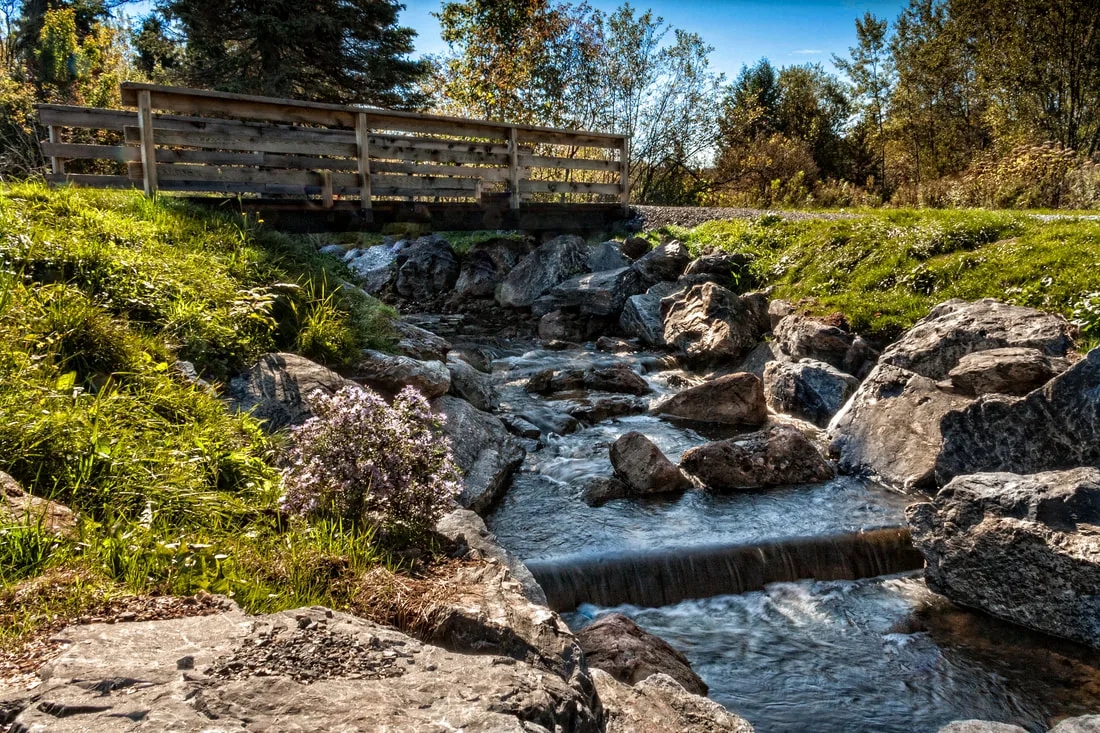
- A defensible baseline. Field-verified wetland and watercourse delineation, not just the provincial reference map. Species-at-risk and migratory bird surveys in the right season. Noise and visual assessments where there are neighbours.
- A real impacts analysis. Reviewers can tell the difference between “impacts will be minimal” and a table that lists each activity, the receptor, the predicted effect and the mitigation.
- Specific mitigation. “Erosion and sediment control will be used” is weak. “Silt fence and check dams installed before grubbing, inspected weekly and after 25 mm rainfall events” is strong.
- Engagement you can show. A public open house, a mailout, a summary of what you heard and what changed. Early, documented engagement with First Nations is expected and the department will ask about it.
- Permits mapped out. A table of every other approval you need (WAWA permits, Fisheries Act review, approvals to construct and operate) with timing. See our guide to when you need a Watercourse and Wetland Alteration permit.
What this looks like in practice
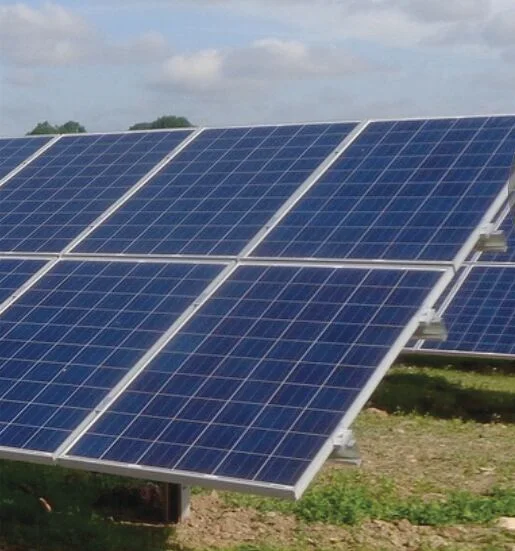
The Violet Solar Farm in Brunswick Mills, developed by C2 Solar, is a clean example of the 3 MW trigger. At 10 MW, 31,200 panels and 40 hectares, enough to power more than 2,000 homes, the project was well above the threshold for item (b). Our environmental team prepared and registered the EIA in July 2019; the determination was issued in February 2020, roughly seven months later. The approvals work earned an ACEC-NB Engineering Excellence award in 2020. Read the case study: Violet Solar Farm.
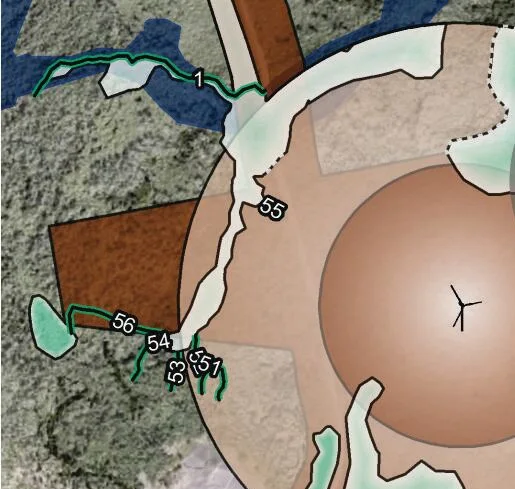
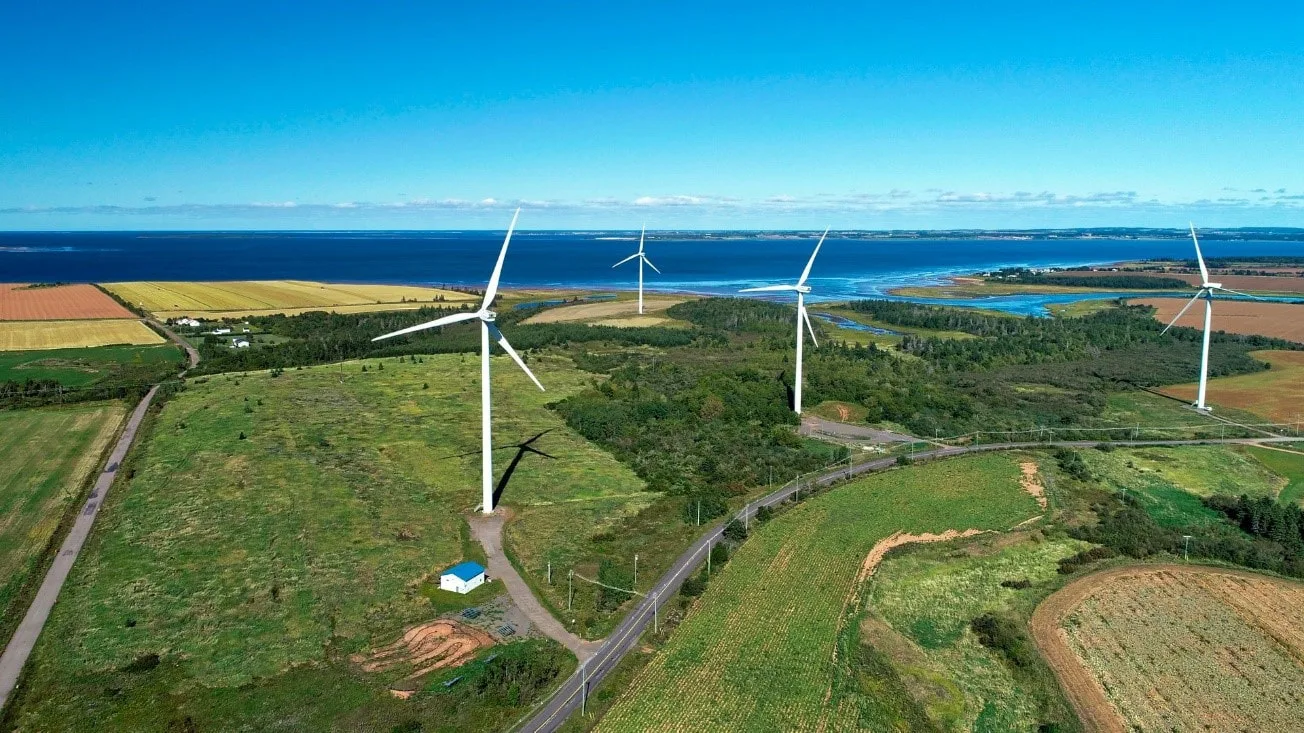
The Burchill Wind Farm in Saint John, for Natural Forces and Saint John Energy, shows the front end of the same process on a larger footprint: 10 turbines at roughly 42 to 45 MW across a 1,658 hectare site. Before registration could be written, the site needed watercourse and wetland delineation across that whole area, a permitting roadmap that laid out every provincial and federal approval, and geotechnical boreholes and test pits on fractured igneous and volcanic bedrock to confirm the turbine locations were buildable. Read the case study: Burchill Wind Farm.
Both projects relied on the same environmental team that handles EIAs, permitting and compliance monitoring across the region. For a developer’s view of the full approvals sequence, see permitting wind and solar farms in Atlantic Canada.
The bottom line
The EIA Regulation is a list, not a judgement call: check Schedule A honestly, and if you are on it, register before you touch the site. Most projects come out the other end with a determination and conditions rather than a full EIA, and the ones that move fastest are the ones that arrive with complete baseline data, concrete mitigation and a record of talking to the people who live nearby.
Key takeaways
- The trigger list is Schedule A of Regulation 87-83; if your project matches a line item, you must register before any physical work.
- Most registered projects are resolved through a determination review with conditions, not a full comprehensive EIA with public hearings.
- The Minister has 30 days to decide once all requested information is in hand, so the real schedule driver is the quality and completeness of your registration document.
- Registration fees are tiered by category: $5,500, $2,750 or $1,100, with exemptions for local governments and some others.
- Reviewers look for baseline data, a credible impacts analysis, specific mitigation and evidence of public and First Nations engagement.
Questions we get asked
How long does an EIA registration take in New Brunswick?
The regulation gives the Minister 30 days to make a determination after all requested information has been received, but the department's technical review and information requests come before that clock starts. In practice, allow several months from submission to determination for a well-prepared registration, and longer if the department asks for additional studies or a full EIA is required.
What is the difference between a determination review and a comprehensive review?
A determination review is the standard path: the department reviews your registration document, consults a technical review committee and either approves the project with conditions or requires a full EIA. A comprehensive review (the full EIA) involves guidelines, terms of reference, a formal EIA report, public meetings and a final decision by the Lieutenant-Governor in Council. It is reserved for projects likely to cause significant environmental impact.
Do I need an EIA for a solar farm in New Brunswick?
Yes if the facility has a production rating of 3 MW or more, because electric power generating facilities at that size are listed in Schedule A. Smaller installations do not trigger the EIA Regulation on generating capacity alone, though they may still trigger it through other items such as wetland impacts, or need other permits.
Can I start site clearing before the EIA determination?
No. Section 4 of the regulation prohibits proceeding with a Schedule A undertaking until the Minister has determined that an EIA is not required (usually with conditions) or the Lieutenant-Governor in Council has approved it after a full EIA. Clearing, grubbing and access roads count as proceeding.
What does an EIA registration document need to include?
The Registration Guide calls for a description of the proponent and project, the site and surrounding environment, the construction and operation activities, the potential environmental impacts, the proposed mitigation, and a summary of public and First Nations engagement. Supporting studies such as wetland delineations, species-at-risk surveys, noise or archaeological assessments are attached as appendices.