Short answer
Permitting a wind or solar farm in Atlantic Canada runs from constraints mapping, through a season of baseline studies, to provincial environmental assessment registration (3 MW or more in New Brunswick; 2 MW or more for wind in Nova Scotia), then site permits for watercourses, wetlands, roads and interconnection. Developers commonly plan 12 to 24 months to approval.
You have a wind resource or a south-facing block of land, a power purchase window and a grid connection that looks feasible. What stands between you and a shovel is a set of approvals that, in Atlantic Canada, are manageable but unforgiving of poor sequencing. Miss the bird survey season and you lose a year. Pick turbine locations before you know where the wetlands are and you assess the project twice.
This is the roadmap we use with developers across New Brunswick, Nova Scotia, PEI and Newfoundland and Labrador.
Which approvals apply to wind and solar in Atlantic Canada?
Provincial environmental assessment
Every Atlantic province runs its own EA process, and the thresholds are low enough that essentially all utility-scale projects register.
| Province | Trigger for wind and solar |
|---|---|
| New Brunswick | Electric power generating facilities of 3 MW or more (EIA Regulation 87-83, Schedule A, item (b)); also 2 hectares or more of wetland, or effects on rare features |
| Nova Scotia | Wind, tidal or wave generation of 2 MW or more is a Class I undertaking under the Environmental Assessment Regulations; solar is not named under the energy items, so confirm the applicable trigger with Nova Scotia Environment |
| Prince Edward Island | Projects are assessed under the Environmental Protection Act; confirm requirements with the province early, as PEI’s process is less prescriptive than NB or NS |
| Newfoundland and Labrador | Registration under the Environmental Assessment Regulations, with the Minister deciding whether further assessment is required |
In New Brunswick, registration leads most often to a Certificate of Determination with conditions rather than a full comprehensive EIA. Nova Scotia’s Class I process gives the Minister 50 days from registration to decide, with a 40-day public comment period. In both provinces, the quality of the registration document determines how many rounds of information requests you face. Our detailed walkthrough of the NB process is in does my project need an Environmental Impact Assessment in New Brunswick?
Federal
Onshore wind and solar rarely trigger a federal impact assessment. The Physical Activities Regulations under the Impact Assessment Act list wind facilities with 10 or more turbines in offshore areas or boundary waters, and new generating facilities inside federal wildlife areas, migratory bird sanctuaries or protected marine areas. Outside those cases, federal obligations arrive through other doors:
- Fisheries Act: any crossing or work near fish habitat, through DFO codes of practice or a Request for Review.
- Species at Risk Act and Migratory Birds Convention Act: bird and bat surveys, nesting-season clearing restrictions, and post-construction mortality monitoring for wind.
- Transport Canada and NAV CANADA: obstruction marking and lighting for turbines, and review of effects on aviation and radar.
Site-level permits
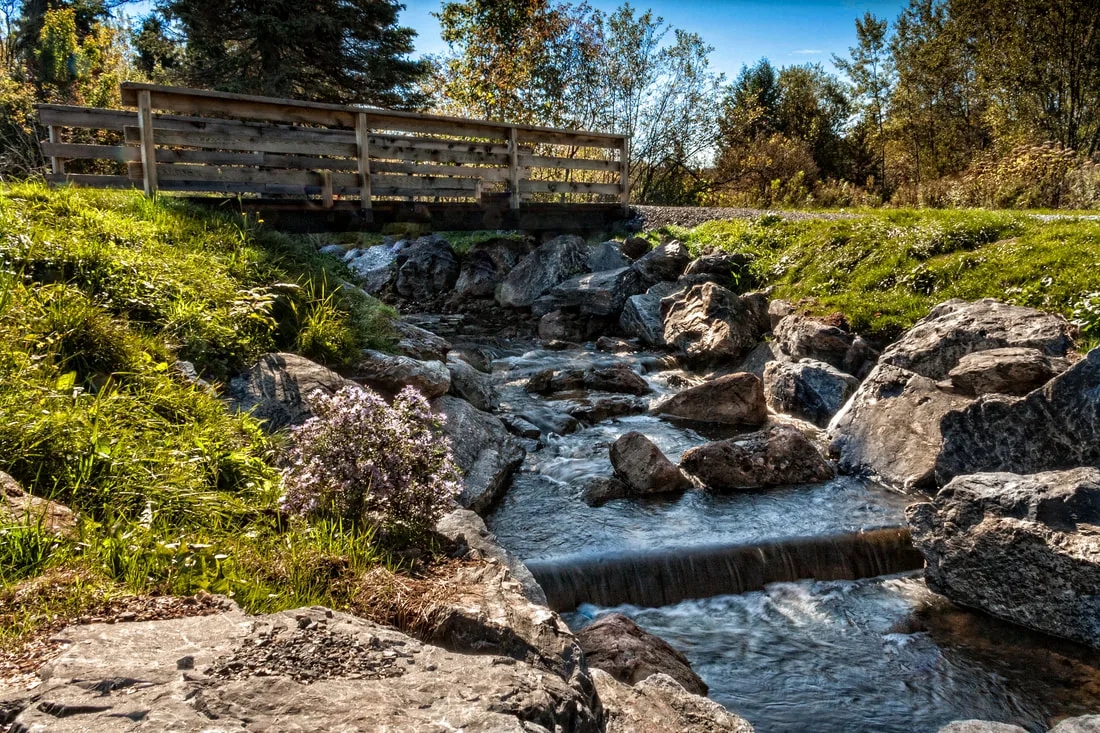
Watercourse and Wetland Alteration permits for every crossing and every structure within 30 metres of water; approvals for access roads off provincial highways; Crown land dispositions where applicable; municipal zoning and building permits; and the utility interconnection process, which has its own studies and timeline.
What is the right sequence?
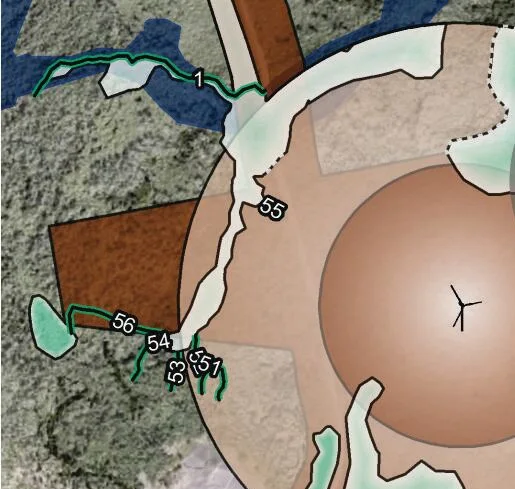
- Constraints mapping (month 0 to 2). Before you option land, overlay everything that limits where turbines or panels can go: mapped wetlands and watercourses with their 30 metre buffers, protected areas, known species-at-risk habitat, residences and setback distances, archaeological potential, slope, bedrock, roads and transmission. The output is a buildable-area map, and it usually shrinks the site more than developers expect.
- Pre-consultation (month 2 to 3). Meet the provincial EIA Branch with the constraints map and a concept layout. Agree the list of baseline studies and the seasons they require. Begin First Nations engagement and community outreach now, not after registration.
- Baseline studies (one full field season, often month 3 to 12). Field delineation of wetlands and watercourses. Breeding bird surveys in June, migration surveys in spring and fall, bat acoustic monitoring through summer and fall. Species-at-risk habitat assessment. Archaeological assessment. Noise and, for wind, shadow flicker modelling against the nearest receptors. Visual assessment where there are viewpoints that matter.
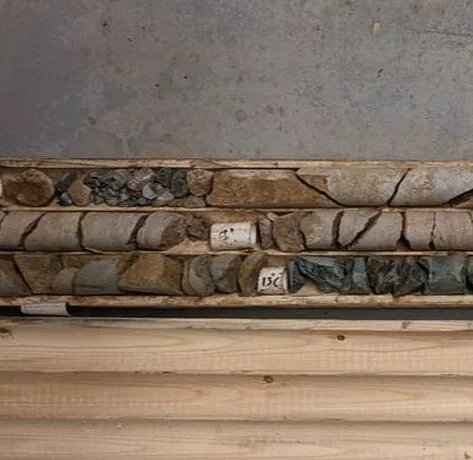
- Geotechnical investigation (overlapping with baseline). Boreholes and test pits at proposed turbine or inverter locations, and along access roads. On the Fundy coast and across much of the region, shallow or fractured bedrock and soft organic soils are the two findings that move foundations. Moving a turbine 150 metres after registration means re-running noise, flicker and wetland analyses, so do this work before the layout is frozen. See what a geotechnical investigation tells you.
- Layout freeze and registration (month 12 to 14). With constraints, baseline data and ground conditions in hand, finalize the layout and prepare the registration document: project description, existing environment, impacts, mitigation, engagement summary, and the permitting roadmap listing every other approval.
- Review and information requests (month 14 to 20). Respond fast and completely. Each round of questions you answer in a week rather than a month shortens the path to determination.
- Determination and conditions (month 18 to 24). Read the conditions carefully. They typically include pre-construction surveys, timing restrictions, erosion and sediment control standards, monitoring and reporting. Build them into the construction contract.
- Site permits and construction readiness. WAWA permits, road access, Fisheries Act reviews, building permits. Stormwater management plans for solar arrays are a particular focus; we have prepared them for 5 MW and 11.3 MW solar sites in Alberta.
The month ranges are planning guidance, not promises. A project with a simple site and a responsive proponent can be faster; a project with contested viewsheds or sensitive species can be slower.
What do reviewers and communities worry about?
For wind: birds and bats (especially migration corridors and bat hibernacula), noise at the nearest dwellings, shadow flicker, visual impact, ice throw setbacks, and the cumulative footprint of roads and collector lines across wetlands and streams.
For solar: land use change on agricultural or forested land, stormwater and erosion from large cleared areas, glare toward roads or airstrips, wetland loss from panel pads and access, and decommissioning commitments.
For both: whether neighbours were consulted early and whether the proponent can show what changed because of what they heard. This is not a box to tick; it is often the difference between a smooth determination and a project that stalls.
What this looks like in practice
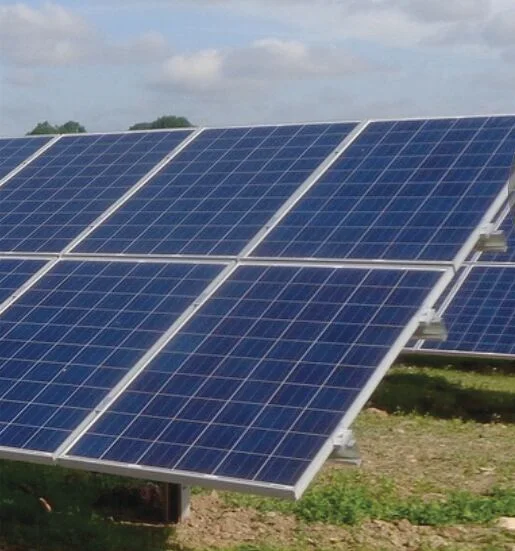
The Violet Solar Farm in Brunswick Mills, New Brunswick, developed by C2 Solar, is a 10 MW facility of 31,200 panels across 40 hectares, generating enough electricity for more than 2,000 homes. At 10 MW it was well above New Brunswick’s 3 MW trigger. Our environmental team prepared and registered the EIA in July 2019, worked through the provincial review, and the project received its approval in February 2020. The approvals work was recognized with an ACEC-NB Engineering Excellence award in 2020. Read the case study: Violet Solar Farm.
The Burchill Wind Farm in Saint John, for Natural Forces and Saint John Energy, is a 10-turbine project of roughly 42 to 45 MW on a 1,658 hectare site. The work followed the sequence above: watercourse and wetland delineation across the full property to define the buildable area and the 30 metre buffers, a permitting roadmap mapping every provincial and federal approval and its timing, and a geotechnical program of boreholes and test pits on fractured igneous and volcanic bedrock to confirm foundation conditions at the turbine locations before the layout was fixed. Having the environmental and geotechnical teams in the same firm meant turbine moves were checked against both wetlands and rock in the same week. Read the case study: Burchill Wind Farm.
Both projects also depended on Watercourse and Wetland Alteration permitting; our guide to when you need a WAWA permit covers that layer in detail.
The bottom line
Wind and solar permitting in Atlantic Canada rewards order. Map the constraints first, spend one honest field season on baseline data, lock the layout only after you know the ground and the water, and register once with a complete document. The projects that reach approval on schedule are not the ones with the fewest issues; they are the ones that found their issues before the regulator did.
Key takeaways
- Constraints mapping before land options is the cheapest decision a developer makes; it tells you where turbines and arrays can realistically go.
- Provincial EA thresholds are low: 3 MW in New Brunswick for any generation, 2 MW for wind in Nova Scotia, so almost every utility-scale project registers.
- Baseline studies are seasonal (birds, bats, wetlands, species at risk), so a missed spring can cost a full year.
- Federal impact assessment rarely applies to onshore wind or solar, but the Fisheries Act, Species at Risk Act and Migratory Birds Convention Act always do.
- Geotechnical investigation belongs in the permitting phase, not after it, because bedrock and wetlands move turbine locations and those changes have to be assessed.
Questions we get asked
What size of solar farm needs an environmental assessment in New Brunswick?
Any electric power generating facility with a production rating of 3 MW or more must be registered under Schedule A of New Brunswick's EIA Regulation (87-83). The threshold applies to solar, wind and other generation alike. Smaller projects may still need Watercourse and Wetland Alteration permits and other approvals.
Does a wind farm in Atlantic Canada need a federal impact assessment?
Usually not for onshore projects. The Physical Activities Regulations under the Impact Assessment Act capture wind facilities with 10 or more turbines in offshore areas or boundary waters, and new generating facilities inside federal wildlife areas, migratory bird sanctuaries or protected marine areas. Onshore projects still have federal obligations under the Fisheries Act, Species at Risk Act and Migratory Birds Convention Act, and may need Transport Canada and NAV CANADA review for turbine height.
How long does wind farm permitting take in New Brunswick?
Plan on 12 to 24 months from constraints mapping to a Certificate of Determination, with the baseline study season as the main driver. Bird and bat surveys usually need spring and fall migration periods plus a breeding season, and the provincial review and information requests follow. Larger or more contentious projects can take longer.
What baseline studies are required for a wind farm?
Typically watercourse and wetland delineation, breeding bird and migration surveys, bat acoustic monitoring, species-at-risk habitat assessment, archaeological assessment, noise modelling, shadow flicker modelling for wind, visual assessment, and a geotechnical investigation of turbine locations. The exact list is confirmed with the provincial EIA Branch during pre-consultation.
Can I start clearing access roads before the EIA determination?
No. In New Brunswick the regulation prohibits proceeding with a registered undertaking until the Minister's determination is issued, and access roads, clearing and laydown areas are part of the undertaking. Starting early risks an order to stop work and complicates the review.