Short answer
Upgrading backup power at a critical facility without losing protection means sequencing the work so a tested source is always available: install and commission the new generator and switchgear in parallel with the old, provide temporary generation during any cutover, and only decommission the existing system once the new one has passed full-load and transfer testing under CSA C282.
Your backup generator was installed when the building was new, and the building is not new anymore. Parts are harder to find, the fuel tank is not what today’s standards expect, and the loads it protects have grown. Replacing it is clearly the right call. The problem is that your facility (a hospital, a telecom switch, a data centre, a water treatment plant, a 911 centre) cannot be without backup power for the six months it will take to do the job. This article is about how to design and sequence that upgrade so that protection never lapses.
Why is upgrading backup power harder than installing it the first time?
In a new building, the generator goes in before anyone depends on it. In an occupied critical facility, every hour of construction is an hour in which a utility outage would hit a building with no backup, unless the project is deliberately planned to prevent that. Add the practical constraints: the generator room was sized for the original unit, the fuel system may not meet current code, the electrical room is full, and the people working in the building cannot have their power interrupted on a weekday afternoon.
So the design problem has three parts: the new system itself, the temporary measures that bridge the gap, and the sequence of cutovers that moves loads from old to new in controlled steps.
What do the codes require?
Two documents shape most of the design in Canada.
The National Building Code of Canada (adopted with amendments by each province) requires emergency power for specific life safety loads: fire pumps where the water supply depends on building power, elevators in high buildings and firefighter elevators, smoke control and venting fans, and emergency lighting and fire alarm systems where batteries are not used instead. The NBC requires that the emergency power source can operate at full load for at least 2 hours. Hospitals and care facilities have additional requirements through CSA Z32, including longer fuel autonomy.
CSA C282, Emergency Electrical Power Supply for Buildings, is referenced by the NBC and the Canadian Electrical Code and governs how the system is built and kept alive. The current edition is C282:24, although provinces adopt editions at different times. It covers the generator room (typically a 2-hour fire-separated service room, or a secured weatherproof outdoor enclosure), working clearances, fuel storage sized for at least 2 hours at full design load with local and remote alarms, transfer equipment, and the maintenance regime: weekly inspections, monthly runs under building load, and semi-annual, annual and five-year inspections, all recorded in a logbook.
Beyond the code-required loads, most critical facilities have operational loads they need to protect: IT, refrigeration, process equipment, communications, HVAC for server rooms. Those are the owner’s decision, and sorting them into “required by code,” “required by operations” and “nice to have” is the first design task.
How do you size and configure the new system?
Start with a load study
Connected load is not the same as operating load. The honest way to size a generator is to measure: log the actual demand on the circuits to be protected over a representative period, identify the large motors and their starting characteristics, and add a defensible margin for growth. Oversizing is not free. A diesel engine that spends its monthly test and its real outages loafing at 15 percent load builds carbon in the exhaust system and shortens its life. Where the load profile is very peaky, paralleling two smaller units can be a better answer than one large one.
Decide on the architecture
| Configuration | Strengths | Trade-offs |
|---|---|---|
| Single generator, single automatic transfer switch (ATS) | Simple, lowest cost | Single point of failure; whole building transfers at once |
| Single generator, multiple ATSs by priority | Life safety loads transfer first; optional loads can be shed | More switches, more controls to coordinate |
| Paralleled generators with switchgear | Redundancy (N+1), better part-load efficiency, staged growth | Highest cost and complexity; needs a skilled maintenance team |
| Closed-transition ATS or paralleling with the utility | Load tests and monthly runs without interrupting the building | Requires utility approval and protective relaying |
For a facility that cannot tolerate even the momentary blink of an open-transition transfer, closed-transition switching deserves a serious look. It also makes the monthly C282 building load test far less disruptive.
Engines rarely cause the failures that make the news. Transfer switches never exercised, batteries never load-tested, fuel that sat for a decade: these are where outages come from, and the upgrade is the moment to fix them.
How do you sequence the work so protection never lapses?
The following sequence is the one Fundy’s building systems team uses as a starting point. Every site changes the details.
- Document the existing system. Verify the single-line diagram, the ATS arrangement, which panels are on emergency power, and the fuel and exhaust routes. Test the existing unit so you know what you are relying on through construction.
- Design the new system in parallel. Wherever possible, site the new generator, fuel tank and switchgear so they can be built without disturbing the old. This may mean a new outdoor enclosure or a new room, with feeders run to the existing distribution.
- Arrange temporary generation for cutovers. Even with a parallel build, there will be hours where the emergency feeders are disconnected to swap an ATS or re-terminate switchgear. A rental generator with a temporary connection, tested before it is needed, covers those windows. For some facilities, the temporary unit is the first thing installed and the last thing removed.
- Schedule cutovers for the lowest-risk windows. Nights, weekends, or whatever your operations define as quiet. Agree in advance who can call a stop.
- Commission the new system completely before relying on it. Factory tests are not enough. Run full-load bank testing, a building load test, transfer timing under real outage simulation, alarm and remote annunciation checks, and fuel system verification. Write it all down. Update the C282 logbook and the arc flash study, since a new source changes fault levels.
- Transfer loads in stages. Move life safety loads first, confirm, then operational loads. Keep the old unit available until the last transfer is proven.
- Decommission. Only now remove the old generator and tank, with the environmental work (fuel removal, any soil assessment around an old underground tank) handled properly.
What this looks like in practice
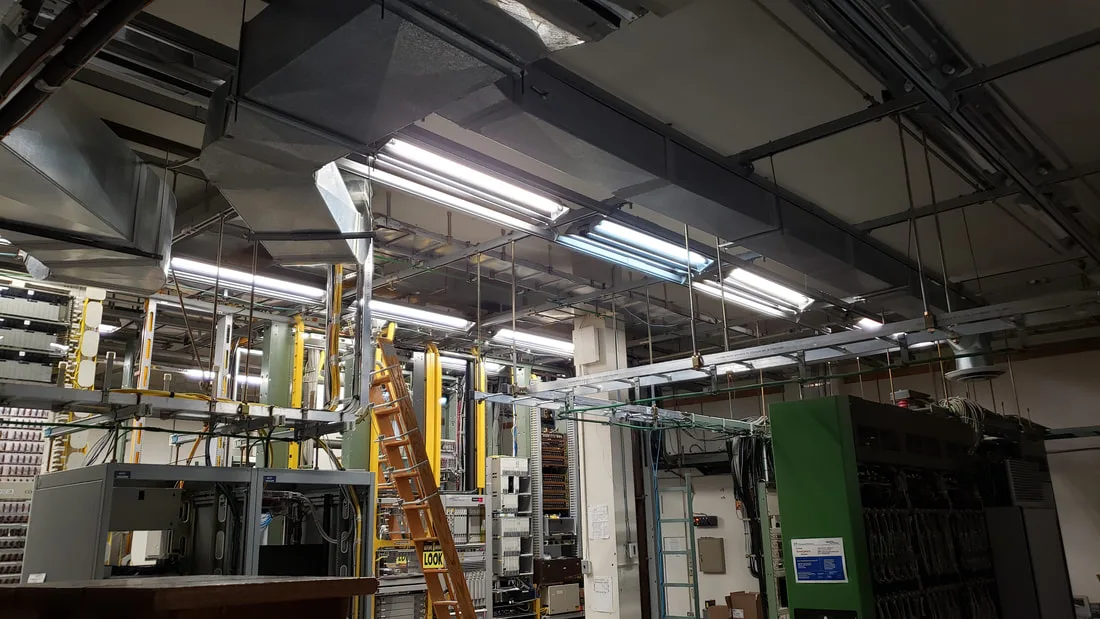
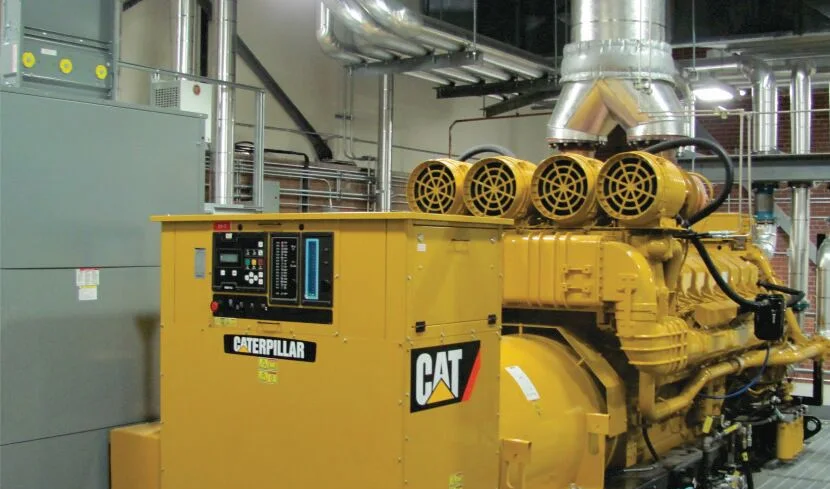
The project that taught us most of this was the Bell Aliant 3.0 MW backup generator for a telecommunications tower in Uptown Saint John, designed and built in 2009 and 2010. The building serves a large share of the region’s communications, so the owner’s requirement was blunt: the existing system could never be without backup power. Fundy’s electrical design was built around that constraint. The new 3.0 MW unit and its switching were installed and commissioned alongside the existing system, with the sequence of cutovers worked out so that a tested source was available at every step. It is a straightforward principle, but it changes everything from where the new equipment sits to how the schedule is written.
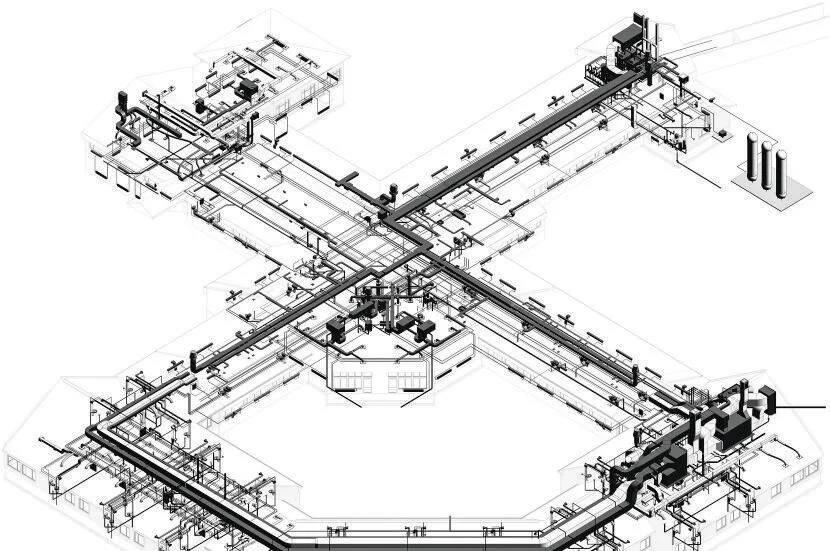
Health care facilities bring their own version of the problem. At the Kiwanis Nursing Home expansion in Sussex, a 2014 to 2016 project adding 30 geriatric and 35 enhanced-care beds, Fundy provided the full mechanical and electrical design, including nurse call, for an expansion attached to an occupied home. Revit BIM was used to coordinate the new services and prevent clashes before they reached the field; in an occupied care facility, a clash found in the model instead of the ceiling is a shutdown avoided.
A generator upgrade is a standard trigger for an arc flash study update, and if it will be the largest capital job your team has run in years, owner-side project management is worth a look.
The bottom line
A backup power upgrade at a critical facility is a sequencing problem first and an equipment problem second. Build the new system beside the old, bridge every cutover with tested temporary power, commission under real load, and decommission last. Design to CSA C282 and the National Building Code from the start, and the facility stays protected on the day the old unit finally leaves the building.
Key takeaways
- The design question is not 'what generator do we need' but 'how do we stay protected every hour of the construction schedule.'
- Right-size for the loads that actually matter under the National Building Code and your own operations, not for the whole building's connected load.
- CSA C282 governs installation, fuel, room construction and the testing regime for emergency power in Canadian buildings; design to it from day one.
- Transfer switches, controls and fuel systems cause more outages than engines do; give them equal attention.
- Commission under real load, in writing, before the old system is touched.
Questions we get asked
Which buildings are required to have an emergency generator in Canada?
The National Building Code requires emergency power for specific life safety loads rather than for building types as such: fire pumps that depend on building power, elevators in high buildings, smoke control and venting fans, and, where batteries are not used, emergency lighting and fire alarm systems. Hospitals and care facilities have additional requirements through CSA Z32. Provinces adopt the NBC with amendments, so confirm with your local authority having jurisdiction.
What does CSA C282 cover?
CSA C282, Emergency Electrical Power Supply for Buildings, sets requirements for the design, installation, operation and maintenance of emergency generator systems: the generator room or outdoor enclosure, fuel storage (a minimum of 2 hours at full design load for most buildings, more for health care), transfer equipment, and a schedule of weekly, monthly, semi-annual and annual inspections and load tests recorded in a logbook.
How big should a backup generator be?
Big enough to start and carry the loads you need under outage conditions, with headroom for motor starting and future growth, but not so large that it runs lightly loaded for hours. Diesel engines that run below roughly 30 percent load for long periods suffer wet stacking and other maintenance problems. A load study and a clear list of code-required versus owner-required loads is the starting point.
Can a new generator be installed while the old one stays in service?
Usually, yes, and that is the preferred approach. The new unit, fuel system and switchgear are built and tested alongside the existing system, and a temporary rental generator covers the facility during the short cutover windows when the automatic transfer switch is changed over. The existing unit is only removed after the new system has passed its acceptance tests.
How long does a generator upgrade project take?
Generator lead times vary widely with size and market conditions, and large units can take many months to arrive. Design, permitting, procurement, construction and commissioning typically span well over a year for a major upgrade at an operating facility. Start planning before the existing unit becomes unreliable rather than after.