Short answer
An arc flash study (incident energy analysis) models a facility's electrical distribution to calculate how much thermal energy a worker could be exposed to at each piece of equipment, sets arc flash boundaries, and produces the warning labels and PPE requirements that CSA Z462 expects. It should be reviewed at least every five years and whenever the electrical system changes.
You have a building full of switchgear, panelboards and motor control centres, and someone (an insurer, an auditor, a new electrician, a safety committee) has asked whether your arc flash labels are current. Or whether you have any. If you run a plant, a hospital, a campus or a telecom site in Atlantic Canada, this question lands on your desk eventually. Here is what the study involves and how to get one that is worth the money.
What is an arc flash, and why does it need its own study?
An arc flash is an electrical explosion. When current jumps through air between conductors, or from a conductor to ground, it creates a plasma arc with extreme heat, a pressure wave, molten metal and blinding light. It can happen when a tool slips, a connection fails, or a breaker is racked in under load. People standing in front of the equipment are the ones who get hurt.
The severity depends on three things: how much fault current the system can deliver at that point, how long the upstream protective device takes to clear it, and how far away the worker is. None of those are obvious by looking at the equipment. A small panel fed by a large transformer with a slow fuse can be more dangerous than a big switchboard with fast, well-set breakers. That is why an arc flash study is a modelling exercise, not an inspection.
What does CSA Z462 actually require?
CSA Z462, Workplace Electrical Safety, is the Canadian standard that governs how people work on or near energized electrical equipment. It is harmonized with NFPA 70E in the United States, and the current edition is Z462:24. The Canadian Electrical Code (CSA C22.1) covers how equipment is installed; Z462 covers how people work on it safely.
Z462 does not say “hire an engineer to produce labels.” It requires an electrical safety program, and within it an arc flash risk assessment for any work that could expose someone to the hazard: identify it, estimate likelihood and severity, and set protective measures. It also expects equipment likely to be worked on while energized to be labelled with the hazard information a qualified worker needs.
To produce those numbers, Z462 recognizes two approaches:
| Method | How it works | Where it fits |
|---|---|---|
| Incident energy analysis | Engineering model of your actual system (usually following IEEE 1584 calculation methods) gives a cal/cm2 value and arc flash boundary for each piece of equipment | Any facility; the only option when equipment falls outside the table assumptions |
| PPE category method | Lookup tables in Z462 assign a PPE category (1 to 4) based on equipment type, provided fault current and clearing time stay within stated limits | Simple systems where the parameters can be confirmed |
For most commercial, institutional and industrial facilities, the incident energy analysis is the one you want. It reflects your real system, and the results are specific enough to be useful.
How is an arc flash study done?
A credible study follows a predictable sequence. If a proposal skips any of these steps, ask why.
- Data collection and field verification. The engineering team walks the facility, verifies the single-line diagram, and records transformer nameplates, conductor sizes and lengths, and the make, model and settings of every protective device. Old drawings are a starting point, not a source of truth.
- Utility fault data. The local utility provides the available short-circuit current at the service entrance. The study considers both the maximum and a lower value, since lower fault current can mean slower clearing and higher incident energy.
- Short-circuit study. The model calculates fault current at every bus. This also confirms whether your equipment is rated to interrupt or withstand the current available to it, which is a code compliance question in its own right.
- Protective device coordination study. Time-current curves for every breaker, fuse and relay are plotted and checked so that the device closest to a fault trips first. Coordination and arc flash pull in opposite directions (slower upstream devices improve selectivity but raise incident energy), and the engineer has to balance them.
- Incident energy calculation. Using the clearing times from the coordination study, incident energy and arc flash boundary are calculated at the working distance for each piece of equipment.
- Mitigation review. Where values are high, the engineer tests options: settings changes, maintenance switches, current-limiting fuses, zone-selective interlocking, remote racking or arc-resistant gear.
- Labels and report. Each piece of equipment gets a label showing nominal voltage, arc flash boundary, incident energy or PPE category at the working distance, and the limited and restricted approach boundaries for shock. The report documents assumptions, data, results and recommendations so the next review can build on it.
What do the numbers on the label mean?
The two numbers people ask about most are incident energy and arc flash boundary. Incident energy, in calories per square centimetre, is the thermal energy a worker’s chest would receive at the standard working distance. The arc flash boundary is the distance at which that energy falls to 1.2 cal/cm2, the threshold for a second-degree burn to bare skin. Anyone inside that boundary while the equipment is energized and exposed needs arc-rated protection.
PPE categories map ranges of incident energy to minimum arc ratings for clothing and face protection, from category 1 (minimum 4 cal/cm2 rating) up to category 4 (40 cal/cm2). Above 40 cal/cm2, most programs prohibit energized work altogether and require the equipment to be de-energized or the hazard engineered down.
One point worth repeating to your electricians: a label describes the hazard; it is not permission to work live. Z462’s first expectation is always an electrically safe work condition.
When does a study go stale?
The hazard changes whenever the system changes. Z462 and NFPA 70E both expect the incident energy analysis to be reviewed for accuracy at least every five years, and updated whenever a change could affect the results. Common triggers include:
- A new or replaced service transformer, or a utility upgrade that raises available fault current
- New distribution equipment, feeders or large motors
- Replaced breakers, fuses or relays, or any change to trip settings
- A new backup generator or solar system, which changes fault current paths
A five-year review is not automatically a full redo. If nothing has changed and that can be documented, the review can be short. If the system has changed, the affected circuits need recalculation and new labels, ideally at the time of the change.
What this looks like in practice
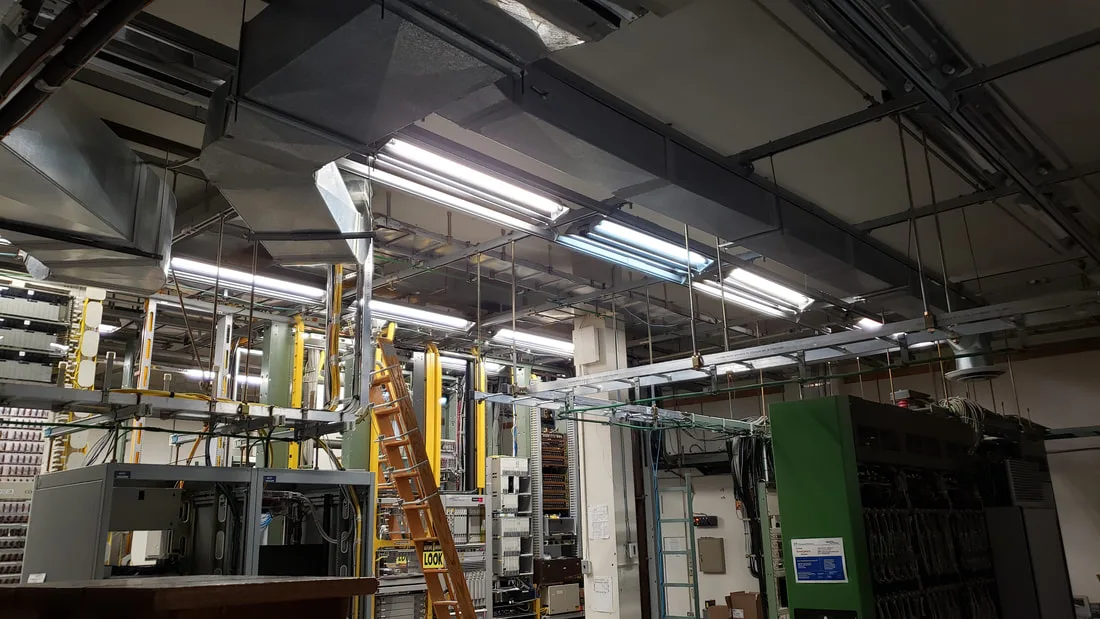
Fundy’s building systems team has carried out arc flash studies at more than 30 Bell sites, work that shows how a multi-site program differs from a one-off study. Telecom facilities combine utility services, rectifier plants, battery strings and standby generation, and the modelling has to account for each source. Across a portfolio, consistency matters as much as accuracy: the same data templates, the same assumptions, and labels that read the same from one site to the next.
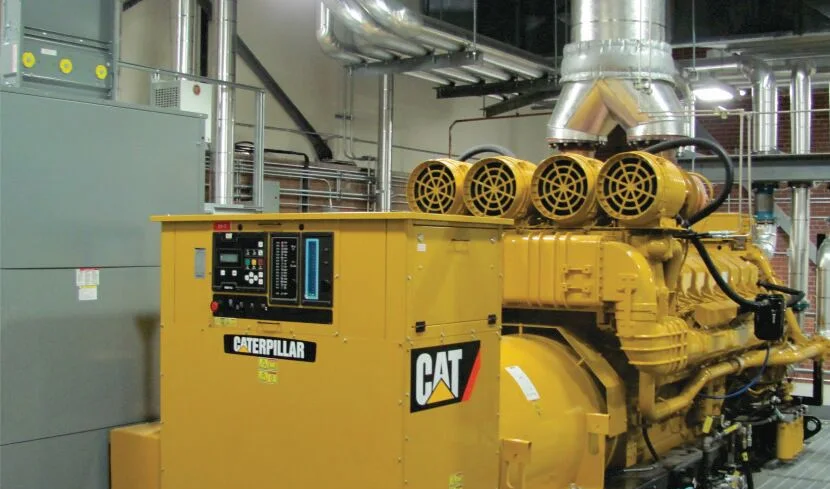
The backup power side of that work is a reminder of why studies need to stay current. When Fundy designed the Bell Aliant 3.0 MW backup generator for a tower in Uptown Saint John in 2009 and 2010, the project added a major new source to the building’s distribution without ever leaving the existing system unprotected. A generator of that size changes the available fault current, the transfer arrangement and the protective settings, and the arc flash study has to follow. We cover that kind of project in upgrading backup power at a critical facility without ever going dark.
If your facility is also planning an energy audit or a generator upgrade, consider having the arc flash model built so it can be updated as the design changes. The data collection overlaps substantially, and doing them together is usually cheaper than doing them apart.
The bottom line
An arc flash study is the engineering work behind the labels, and the labels are the part your electricians see. Done properly, it confirms your equipment is rated for the fault current available to it, finds the places where a settings change can cut the hazard, and gives your safety program numbers it can stand behind. Treat it as a living document: review it every five years at most, and update it the day your system changes.
Key takeaways
- CSA Z462 is the Canadian workplace electrical safety standard; an arc flash study is how you satisfy its risk assessment and labelling expectations.
- The study needs a verified one-line diagram, short-circuit data from the utility, and the actual settings on your protective devices, not the ones in the drawings.
- Labels are only as good as the system they describe: review the study at least every five years and whenever equipment, settings or the utility supply change.
- The most valuable output is often not the label but the list of equipment where a settings change or a maintenance switch can cut the hazard dramatically.
- An arc flash study is a snapshot; an electrical safety program is what keeps people safe between snapshots.
Questions we get asked
Is an arc flash study legally required in Canada?
There is no single federal law that says 'do an arc flash study.' Provincial occupational health and safety legislation requires employers to identify and control electrical hazards, and regulators and courts treat CSA Z462 as the recognized standard of practice for doing that. Z462 expects an arc flash risk assessment, and for most facilities the practical way to do one is an incident energy analysis. Confirm the specific wording with your provincial regulator, such as WorkSafeNB.
How often does an arc flash study need to be updated?
Review it for accuracy at least every five years, and sooner whenever anything that affects fault current or clearing time changes: a new transformer or service, added distribution equipment, replaced breakers or fuses, changed trip settings, or a utility upgrade. A review does not always mean a full recalculation, but changes to affected circuits should be recalculated and relabelled.
What is the difference between the incident energy method and the PPE category method?
The incident energy method calculates the actual cal/cm2 exposure at each piece of equipment using software and your real system data, and PPE is chosen to exceed that number. The PPE category method uses the lookup tables in CSA Z462, which only apply when your equipment matches the table's assumptions about fault current and clearing time. The two methods must not be mixed on the same piece of equipment.
What information do I need to gather before an arc flash study starts?
Single-line diagrams (even old ones), utility available fault current at the service, nameplate data for transformers and large motors, the make, model and settings of every breaker, fuse and relay, and conductor sizes and lengths between equipment. The engineering team will field-verify most of it, but a good starting package shortens the site work considerably.
Can an arc flash study reduce the hazard, or does it just measure it?
Both. Once the model exists, engineers can test mitigation options: adjusting breaker settings, adding maintenance switches or zone-selective interlocking, replacing slow fuses, or relocating remote operation. Many facilities find that a handful of inexpensive settings changes drops several pieces of equipment into a lower PPE requirement.