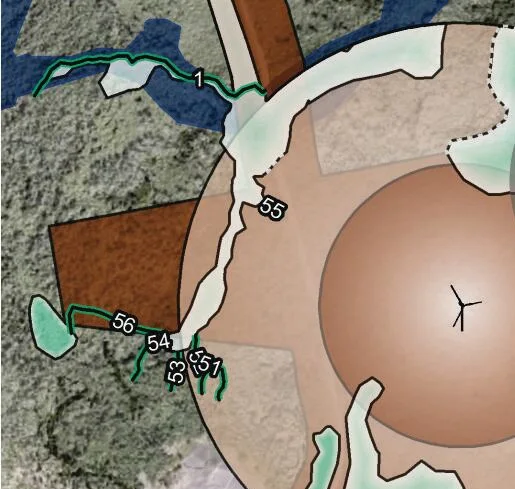
Burchill Wind Farm
Ground-truthing 1,658 hectares for a 42 MW wind project
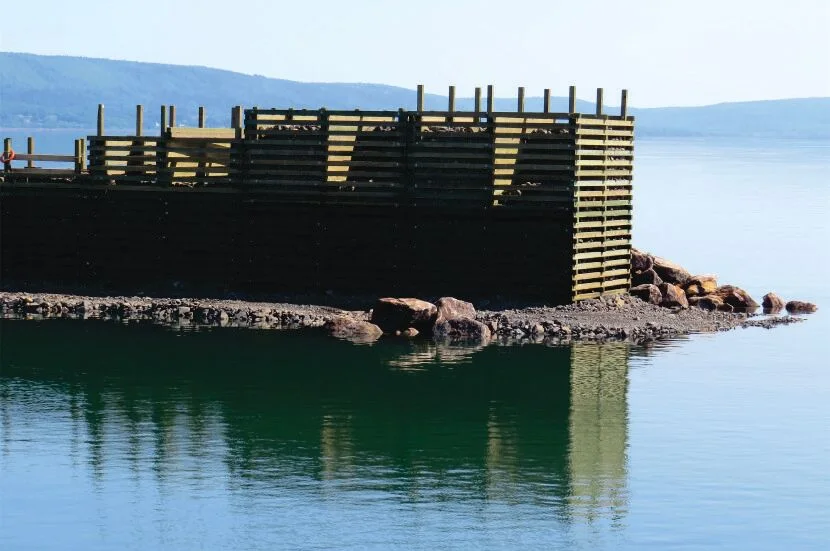
A 300 m breakwater redesigned around poor soils.
Condition and needs assessments led to a harbour upgrade design, and borehole results reshaped the breakwater into armour stone finished with a ballast-filled wooden crib.
Digby’s economy depends on its harbour, the link to the sea-based fishery and aquaculture. When the not-for-profit Digby Harbour Port Association took ownership in 2007, the harbour had fallen into disrepair.
We undertook a comprehensive geotechnical investigation to document the condition of the wharf’s wooden and concrete structures, and interviewed stakeholders for a needs assessment. With Cormier Management Consulting, we provided design recommendations based on the needs of users and the community, with cost estimates: new floats, gangways and lighting, and, as the major component, a new 300 m breakwater.
Boreholes revealed poor soil conditions, so the breakwater design had to change. A traditional armour stone breakwater was built to full height near shore. For the remainder, armour stone was built to a +1.5 m elevation and finished with a wooden crib filled with ballast rock to give maximum protection at low tide. We inspected the breakwater’s construction in 2013 to confirm conformance with the design.
Related work
Ground-truthing 1,658 hectares for a 42 MW wind project
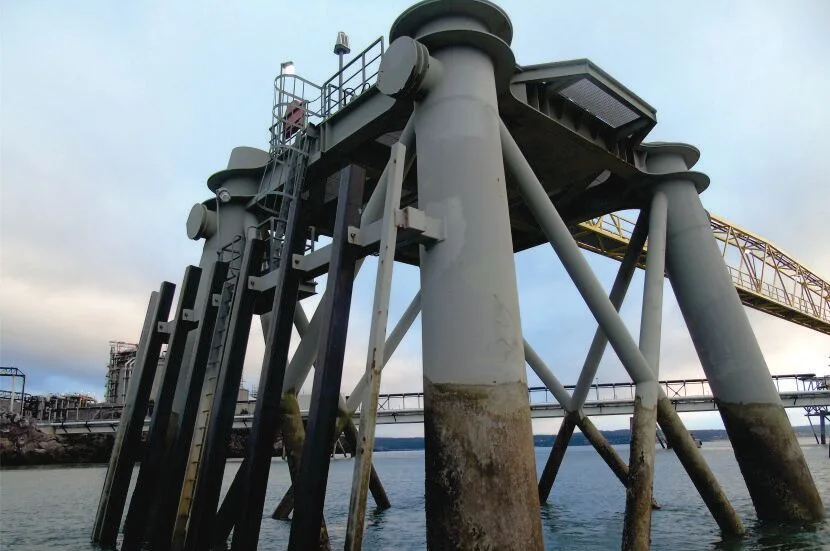
Managing an above- and below-water survey of a pier built for the world's largest LNG carriers
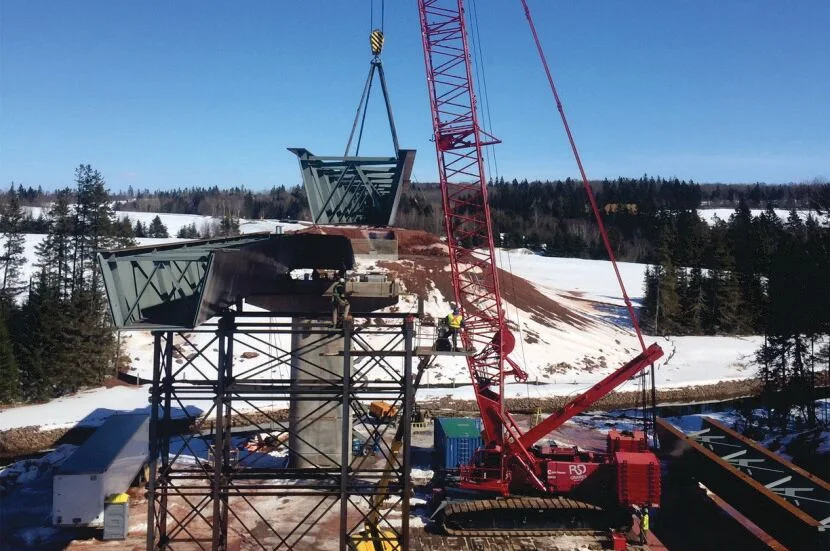
Two engineered pads for a 440-ton crawler crane on the Cornwall Bypass
Read more: What a geotechnical investigation tells you (and what it costs to skip one) · Aquaculture site selection and mooring design in high-energy Atlantic waters: how to pick a site that holds, and a grid that holds it · Designing wharves, slips and breakwaters for the world's highest tides
Start the conversation
A short project brief takes two minutes. A senior engineer in the right discipline reads it and gets back to you within one business day.