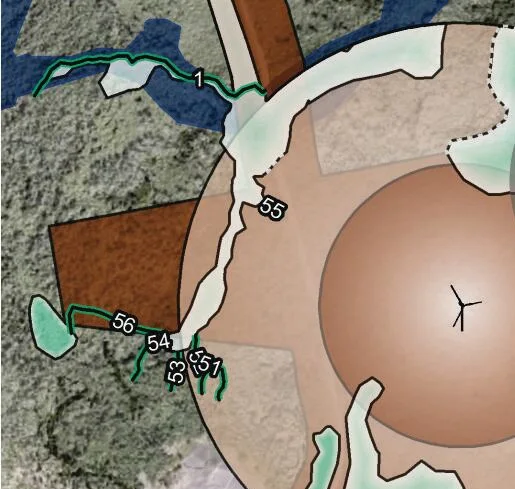
Burchill Wind Farm
Ground-truthing 1,658 hectares for a 42 MW wind project
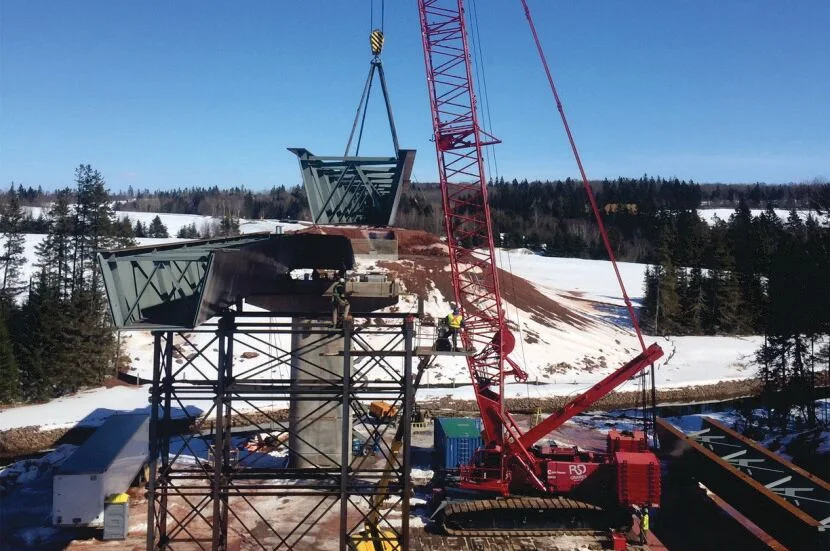
Two engineered pads for a 440-ton crawler crane on the Cornwall Bypass.
Excavation to bearing soil, compacted Select Borrow and Class A gravel, and two layers of Tensar TriAX geogrid let a heavy-lift crane set the bridge's steel girders safely.
Phase 2 of the Cornwall Bypass began in spring 2018, routing the Trans-Canada Highway around the Town of Cornwall between North River and New Haven. A major component of the $58 million project was a 140 m concrete and steel bridge over the Clyde River.
The contractor needed a Manitowoc 440-ton heavy-lift crawler crane to install steel girders between the abutments and centre pier. Based on our geotechnical observations and investigations, the existing fills would not support it: excavation and soil improvement were required.
Preparing the two crane pads involved excavating to adequate bearing soil and placing compacted Select Borrow and Class A gravel, with two layers of Tensar TriAX 130S geogrid installed in each pad. Materials testing confirmed compaction as the work progressed. The crane arrived in January 2019 for assembly on the engineered pads, and the girders were set in February and March 2019.
Related work
Ground-truthing 1,658 hectares for a 42 MW wind project
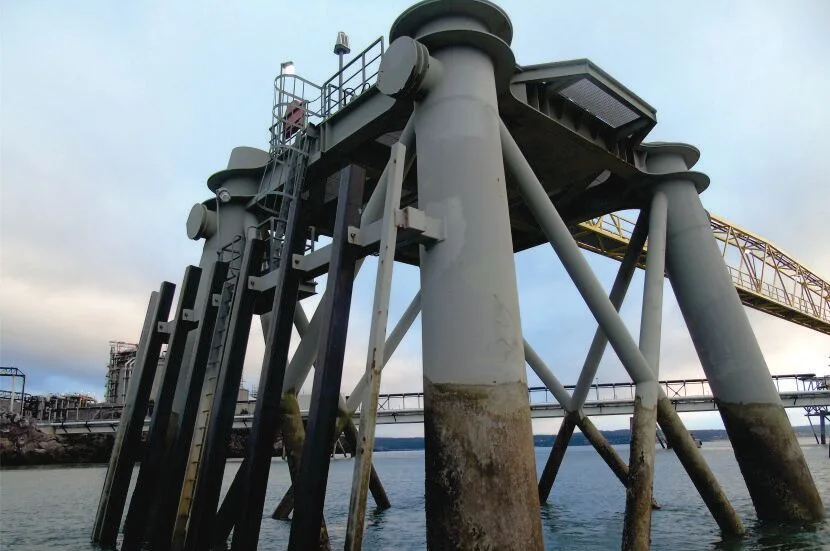
Managing an above- and below-water survey of a pier built for the world's largest LNG carriers
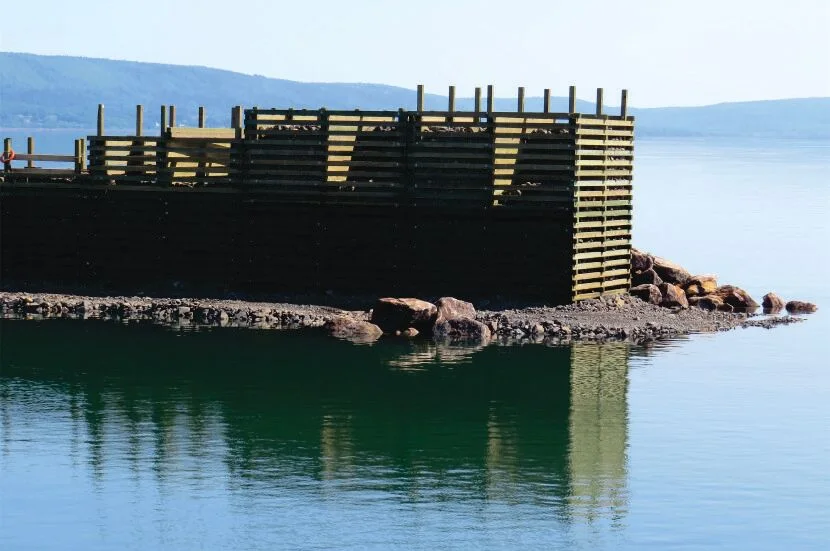
A 300 m breakwater redesigned around poor soils
Read more: What a geotechnical investigation tells you (and what it costs to skip one) · Crane pads and temporary works: small geotechnical decisions with big consequences
Start the conversation
A short project brief takes two minutes. A senior engineer in the right discipline reads it and gets back to you within one business day.