Short answer
A crane pad is an engineered working platform that spreads a crane's track or outrigger loads into the ground so the crane stays level and stable during a lift. Designing one means knowing the crane's ground bearing pressure for the planned lift, investigating the soil beneath the pad, and building a compacted granular platform (often reinforced with geogrid) thick enough to keep stresses on the subgrade within safe limits. Pads, haul roads, shoring and temporary access are temporary works, but their failures are permanent.
The bridge girders arrive next month. The crane is booked, the lift plan is done, and someone asks where the crane will sit and what it will sit on. If the answer is “the contractor will put down some gravel,” you are about to make one of the smallest decisions on the project and one of the most consequential.
What is a crane pad, and what does it do?
A crane pad is an engineered platform that carries the crane’s weight and the weight of its load into the ground without excessive settlement, tilt or bearing failure. For a crawler crane, that means the pressure under two long tracks; for a mobile crane, four outriggers, each a concentrated point load.
The pressures involved are large. A big crawler crane with a heavy load at radius can put several hundred kilopascals under the loaded track, depending on configuration, and that pressure shifts from track to track as the crane swings. Most natural soils in Atlantic Canada, from glacial till to marine clay to coastal fill, cannot carry that safely without help. The pad is the help.
Why do crane pads fail?
In our experience, crane pad problems trace back to a short list of causes:
- Nobody checked the ground. The pad was built on whatever was there, which turned out to be soft, wet, organic or loose fill.
- The lift changed. The pad was designed for one load and radius, and the lift that actually happened was heavier or further out.
- Water. Rain, a high water table or runoff from the site softened the subgrade between pad construction and the lift.
- Construction shortcuts. Wrong aggregate, lifts too thick to compact, geogrid left out or laid wrong, edges not extended far enough beyond the tracks.
- Nobody owned it. The pad fell between the crane supplier, the general contractor and the designer, and no engineer ever signed off.
The consequences range from a crane that settles and has to be re-levelled mid-lift to a crane on its side. In between is the common and expensive outcome: a delayed lift while someone rebuilds the pad with the girders sitting on the trucks.
How is a crane pad designed?
- Define the lift. Crane model, configuration, counterweight, the heaviest load, its radius and the full swing path. Crane manufacturers publish ground bearing pressures for their machines; the engineer needs the worst-case combination, not the average.
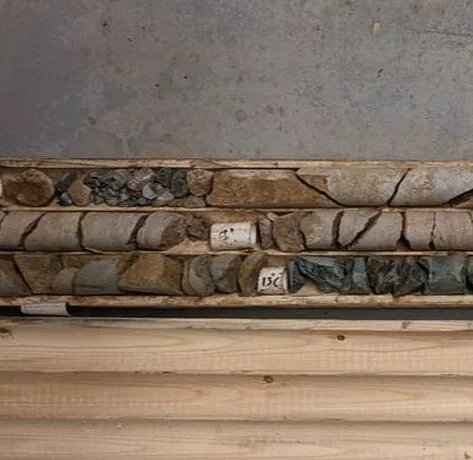
- Investigate the subgrade. Test pits or boreholes at the pad location establish soil type, strength, moisture and groundwater. This can often be folded into the project’s main geotechnical investigation if someone thinks of it early.
- Set the bearing criteria. Allowable pressure on the subgrade, with a safety factor appropriate to a lift where failure has serious consequences.
- Design the platform. Thickness and type of granular material, number and position of geogrid layers, extent beyond the tracks or outriggers, and surface tolerance for levelling.
- Specify construction control. Material gradation and quality, lift thickness, compaction testing, and inspection of geogrid placement. A pad is only as good as the compaction testing says it is.
- Confirm before the lift. Check that the as-built pad matches the design, that it has not been softened by weather, and that the lift has not grown.
A typical pad section
| Layer | Purpose |
|---|---|
| Prepared subgrade | Soft or organic material removed; surface proof-rolled and shaped to drain |
| Geogrid (lower layer) | Confines the first granular lift and spreads load into the subgrade |
| Compacted granular fill (select borrow) | Builds thickness, distributes track or outrigger pressure |
| Geogrid (upper layer, where required) | Further confinement under the highest stresses |
| Compacted crushed gravel surface | Dense, level working surface for mats and tracks |
| Crane mats | Spread outrigger or track loads over the pad surface |
The exact section comes from calculation and the site’s soils. Two pads for the same crane on two sites can look nothing alike.
What about other temporary works?
Crane pads are the most visible example, but the same logic applies to every temporary structure that supports people, equipment or the permanent work:
- Haul roads and laydown areas. Loaded trucks and stored precast on weak ground cause rutting, settlement and damage to underground services.
- Temporary access over water or mud. A road across an intertidal zone or soft shoreline has to carry excavators and loaded trucks, and then be removed cleanly.
- Shoring and excavation support. Temporary walls holding back soil and water next to roads and buildings, where a failure endangers more than the excavation.
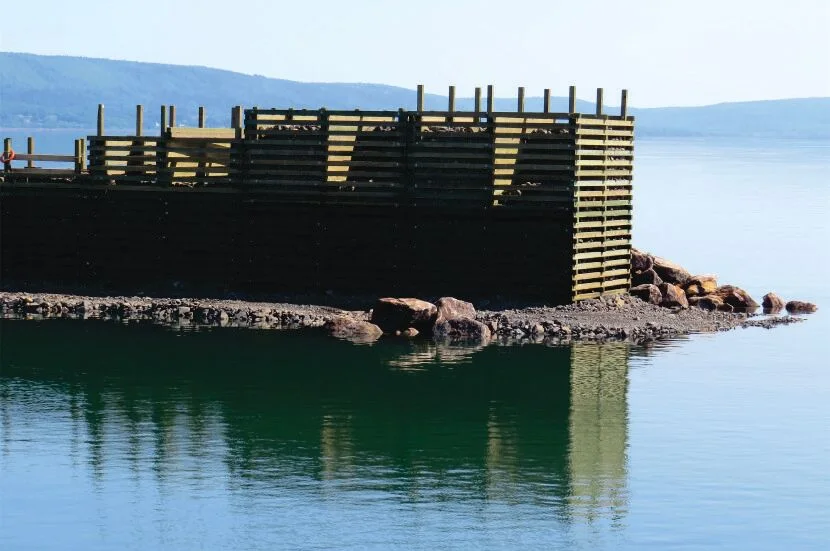
- Cofferdams. Temporary structures that keep water out of a work area, where the hydrostatic load is relentless and the consequences of a breach are immediate.
- Working platforms for piling rigs. Tall, heavy and top-sensitive machines that need the same treatment as cranes.
All of these are “temporary” only in the sense that they are removed at the end. The ground they sit on, the water they hold back and the people around them are permanent. Our geotechnical and survey group treats temporary works as engineering, with investigation, design, inspection and testing, because that is what they are.
What this looks like in practice
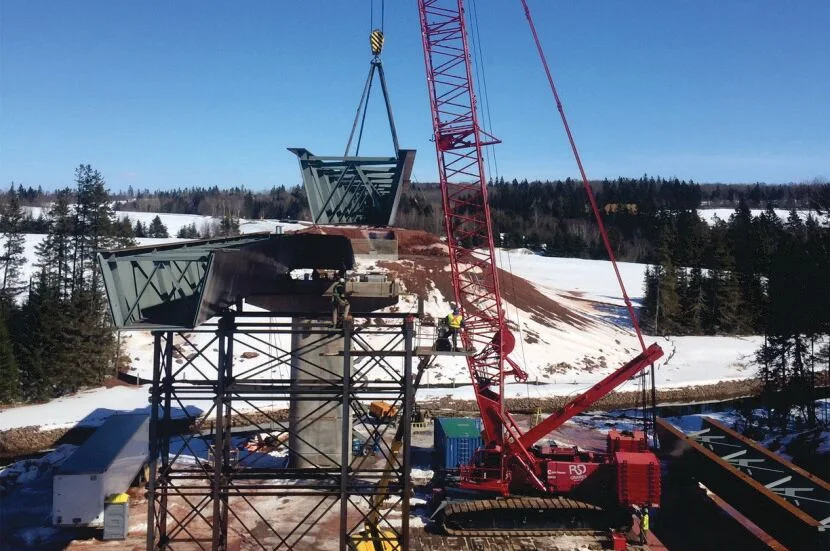
The Clyde River Bridge crane pads on the Cornwall Bypass in PEI are the clearest example we can offer. In 2018 and 2019, Noye & Noye needed pads capable of supporting a Manitowoc 440 ton crawler crane to erect a 140 metre bridge on a $58 million project. Our team designed the pads using Select Borrow and Class A gravel with two layers of Tensar TriAX geogrid, with the section set by the crane’s bearing pressures and the site’s soil conditions. With girders of that scale, there is no “try it and see.” The pad has to be right the first time, and the design, materials and construction control are what make it so.
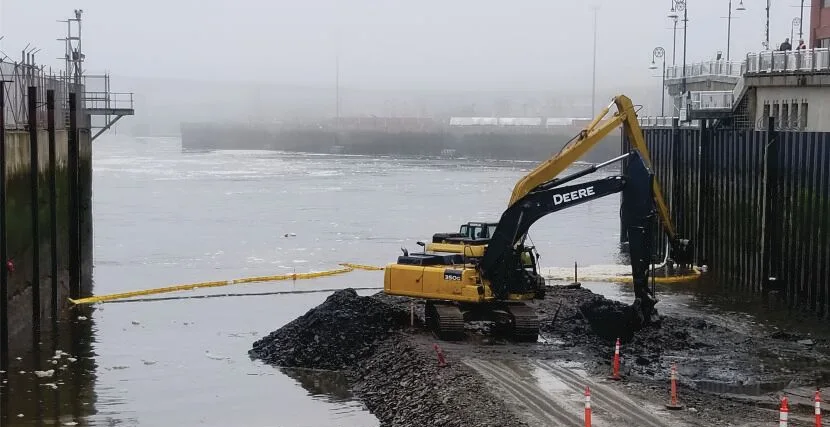
At Market Slip in Saint John, the temporary works were the construction method. To remove roughly 3,000 cubic metres of sediment from the slip in 2019 and 2020, the City’s project used a temporary road built into the intertidal zone so land-based equipment could work at low tide. That road carried excavators and loaded trucks over soft harbour sediment twice a day, had to be designed to do so safely, and had to come out cleanly when the dredging was done, with the low-level contaminated material placed in a lined disposal cell. Building on the Fundy coast means designing around the tide, a subject we cover in our guide to marine structures and Bay of Fundy tides.
The bottom line
A crane pad is a few truckloads of gravel and a sheet of geogrid, and it is also the thing standing between a successful lift and a very bad day. Define the lift, investigate the ground, design the platform, control the construction and confirm it before the hook goes up. The same rigour applies to haul roads, shoring, cofferdams and every other piece of temporary work. Small decisions, big consequences.
Key takeaways
- A crawler crane's track pressure under a heavy lift can exceed what most natural soils can safely carry, so the pad is doing real structural work.
- The design starts with the lift: crane model, configuration, load, radius and swing path, because bearing pressure changes as the crane rotates.
- The subgrade has to be investigated, not assumed; a pad built on soft or wet ground is a pad built on hope.
- Geogrid-reinforced granular platforms spread load and reduce thickness, but they only work with the right aggregate, compaction and construction control.
- Temporary works deserve the same engineering rigour as the permanent structure, because a tipped crane or a failed shoring wall is not temporary.
Questions we get asked
Does a crane pad need to be designed by an engineer?
For large crawler and mobile cranes, yes. Crane standards and provincial occupational health and safety rules put the responsibility for adequate ground support on the employer or contractor, and the practical way to meet it is a pad designed by a geotechnical engineer using the crane's published ground bearing pressures and site-specific soil data. Small lifts on firm ground may be handled with mats and a competent-person assessment, but the bigger the crane and the softer the ground, the less room there is for judgment calls.
What information does an engineer need to design a crane pad?
The crane make and model, boom and counterweight configuration, the heaviest planned load and its radius, the swing path, and the pad location and dimensions. From the crane manufacturer's data this gives ground bearing pressures under each track or outrigger. The engineer then needs soil and groundwater information from boreholes or test pits at the pad location, and a construction schedule, since weather and season affect subgrade strength.
How thick should a crane pad be?
There is no standard thickness. It depends on the bearing pressure from the crane, the strength of the subgrade and whether geogrid reinforcement is used. Pads for very large crawler cranes on soft ground can require well over a metre of engineered granular material; pads on firm, dry till or rock can be thin. The design calculation, not a rule of thumb, sets the number.
What is geogrid and why is it used in crane pads?
Geogrid is a stiff polymer grid placed within a granular layer. The aggregate locks into its openings, which confines the stone, spreads load over a wider area and reduces how much granular thickness is needed. In a crane pad or haul road over weak soil, one or two layers of geogrid can make the difference between a practical platform and an impractically thick one.
Who is responsible for temporary works on a construction site?
Usually the contractor, under the construction contract and occupational health and safety law, with design by a qualified engineer where the work is significant. Owners are not off the hook: a temporary works failure stops the project, damages the permanent work and invites claims. Many owners now require a temporary works design and review process in the contract, and ask their own engineer to look at it.