Short answer
A Phase I ESA is a non-intrusive review of a property's history, records and current condition to identify potential contamination, following CSA Z768. A Phase II ESA follows when a Phase I finds concerns: it samples soil, groundwater or building materials under CSA Z769 to confirm whether contamination exists and how far it extends.
You have an offer on a commercial property, your lender has asked for “a Phase I,” and you are now wondering whether that is a formality or the start of something expensive. Or you are the seller, and a buyer’s consultant has just flagged your former fuel tank. Either way, you need to know what these assessments actually are, what they cost you in time, and what happens when one finds something.
Here is the plain-language version from the people who write them.
What is a Phase I environmental site assessment?
A Phase I ESA is detective work without a shovel. Its purpose is to identify whether a property has, or is likely to have, contamination from past or present activities. In Canada the scope is set by CSA Z768, the national standard for Phase I ESAs, and a competent report will say so on the cover.
A Phase I has four parts:
- Records review. Historical aerial photographs, fire insurance plans, city directories, title documents, provincial environmental records, and regulator files on spills, tanks and permits.
- Site visit. A trained assessor walks the property and its neighbours, looking for staining, vent pipes, fill ports, drums, transformers, floor drains, suspect building materials and anything else that hints at a past use.
- Interviews. Current and former owners, tenants, operators and sometimes the municipality.
- Evaluation and report. Findings are summarized as areas of potential environmental concern (APECs), with a recommendation on whether further investigation is warranted.
There is no sampling. If a Phase I report includes lab results, it has gone beyond Phase I, which is fine as long as everyone knows it.
What is a Phase II environmental site assessment?
A Phase II ESA answers the question the Phase I raised: is there actually contamination here, and how much? Its scope is set by CSA Z769. The consultant designs a sampling program targeted at the APECs: boreholes or test pits through a former tank nest, monitoring wells downgradient of a service garage, soil vapour probes under a slab, or samples of suspect building materials.
Results are compared against screening criteria. In Atlantic Canada that usually means the Atlantic RBCA (Risk-Based Corrective Action) screening levels, which vary by land use, soil type and whether groundwater is used for drinking. The report tells you what exceeds the criteria, where, and what the realistic options are.
A Phase II is often scoped in stages: a first round confirms presence or absence, a second delineates the extent, which keeps costs proportional to what is found.
Phase I vs. Phase II at a glance
| Phase I ESA | Phase II ESA | |
|---|---|---|
| Standard | CSA Z768 | CSA Z769 |
| Question answered | Could this site be contaminated? | Is it, and how badly? |
| Field work | Site walk, no sampling | Drilling, test pits, wells, lab analysis |
| Typical trigger | Purchase, financing, lease, refinancing | Phase I identifies an APEC |
| Output | List of APECs and a recommendation | Lab data compared to criteria, next steps |
| Timeline | Usually weeks | Weeks to a few months, depending on access, drilling and lab turnaround |
Who asks for these, and why?
Lenders want to know the collateral is not a liability. Most Canadian banks and credit unions require a Phase I for commercial, industrial and multi-residential loans, and will require a Phase II if the Phase I recommends one.
Purchasers want to avoid inheriting someone else’s problem. Under New Brunswick’s Contaminated Sites Regulation (in force since August 2024), a person who discovers historical contamination has 30 days to report it in writing to the Minister and affected landowners. Finding out before you own the property is far better than finding out after.
Sellers increasingly commission their own Phase I to avoid surprises mid-transaction, though a buyer’s lender may still want a reliance letter or an update.
Municipalities and developers need them for brownfield redevelopment. We cover that path in brownfield redevelopment: how contaminated sites become buildable again.
What does a good Phase I report look like?
A thin Phase I is a false economy. When you receive one, check for:
- A clear statement that the work follows CSA Z768, and any deviations explained.
- Historical coverage back to first developed use, not just the last twenty years.
- A site plan showing APECs, not just a paragraph describing them.
- Photographs of the site visit, dated.
- A regulatory records search, including provincial contaminated sites and spill records.
- An assessor with a recognized designation (CESA or EP) and a reviewing professional’s signature.
- A plain conclusion: either no further work recommended, or a scoped Phase II.
If the report says “no APECs” on a former service station, ask questions.
When does a flagged site still make sense to buy?
Often. A Phase I is deliberately conservative; it flags possibilities. A Phase II then tells you whether the possibility is a few cubic metres of petroleum-impacted soil beside a former tank, or a groundwater plume heading toward a neighbour’s well. Those are very different problems, and only the first is routine.
Where contamination is confirmed, New Brunswick’s Guideline for the Management of Contaminated Sites (Version 3.0, 2023) allows a risk-managed outcome as well as full remediation. Many commercial sites are closed with engineered controls (paved cover, vapour barriers) and institutional controls (no potable wells, no residential use) rather than wholesale excavation. The price and the timeline follow from that choice, which is why a Phase II is an investment in better negotiating information, not just a hurdle.
What this looks like in practice
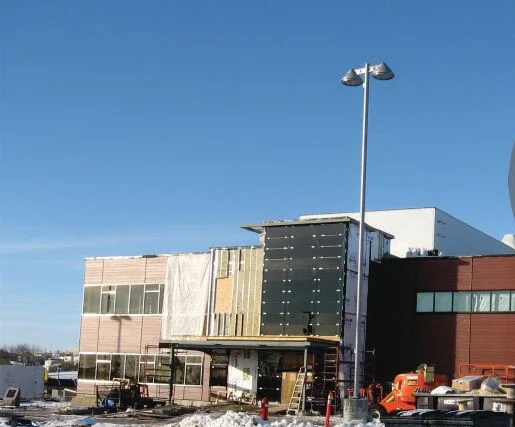
When Saint John Energy planned its new headquarters in west Saint John, the chosen site was a former brewery, a classic brownfield with a long industrial history. Our environmental team completed the Phase I ESA that established the site’s condition before design began, and the firm went on to provide mechanical and electrical design and construction management for the building between 2006 and 2008. The owner, the architects (BGHJ Architects) and the project team worked from the same environmental facts from day one. Read the case study: Saint John Energy headquarters.
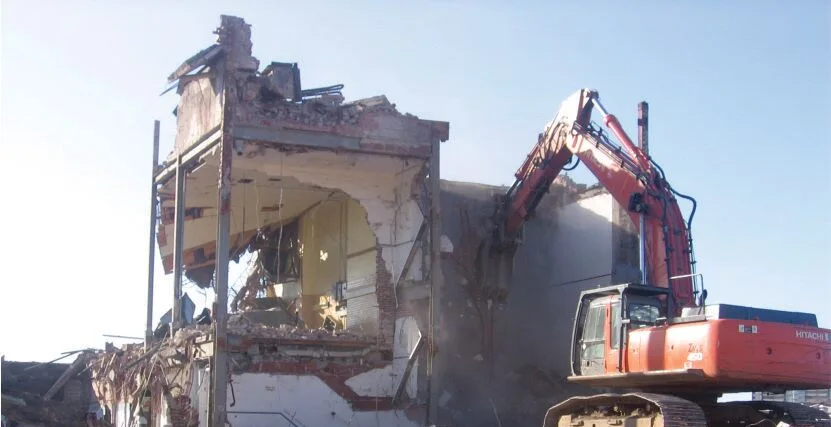
The other side of the coin is a site where contamination is known and the job is to close it out properly. For the Saint John YMCA-YWCA decommissioning (2007 to 2008, for the NB Department of Supply and Services), the work ran from a hazardous materials survey covering asbestos, PCB ballasts and lead paint, through air monitoring during abatement, to soil and groundwater remediation at an underground storage tank, and finally regulatory file closure. The cleared site became the Saint John Justice Complex. That is the full arc: assess, remediate, document, close. Read the case study: Saint John YMCA-YWCA decommissioning.
Both were delivered by the same environmental team that handles due diligence files across Atlantic Canada.
How to sequence due diligence so it does not delay closing
- Order the Phase I as soon as you have a conditional agreement. Records requests are the slow part, and they start the clock.
- Tell the consultant who will rely on the report. Lender, purchaser, or both. Reliance is easier to build in than to add later.
- Build a Phase II contingency into the conditions. If the Phase I recommends sampling, you want time to do it, not a forced waiver.
- Share findings early with the lender. A Phase II with a clear risk-management path is usually bankable; a surprise is not.
- Keep the reports. They are the first chapter of the site’s regulatory record, and the next buyer will ask for them.
If the project also involves a use listed under the provincial EIA Regulation, that approval runs on its own timeline. Our guide to whether your project needs an Environmental Impact Assessment in New Brunswick covers the triggers.
The bottom line
A Phase I ESA tells you where to look; a Phase II tells you what is there. Neither is a verdict on the deal. Treat them as the cheapest information you will buy in the whole transaction, order them early, and make sure the firm doing them follows the CSA standards and can carry the site through to closure if it comes to that.
Key takeaways
- A Phase I ESA finds reasons for concern; a Phase II ESA tests whether those concerns are real.
- Lenders and purchasers in Atlantic Canada routinely require a Phase I ESA before closing on commercial or industrial property, and a Phase II if the Phase I flags issues.
- The CSA standards (Z768 for Phase I, Z769 for Phase II) set the scope, so insist on a report that follows them.
- Phase I findings often turn out to be manageable once a Phase II quantifies them, so a flagged site is not automatically a dead deal.
- In New Brunswick, discovering historical contamination triggers reporting duties under the Contaminated Sites Regulation, so sequence your due diligence before you take title.
Questions we get asked
How long does a Phase I environmental site assessment take in New Brunswick?
Most Phase I ESAs take a few weeks from authorization to final report, driven mainly by how quickly records requests come back and how soon the site walk can be scheduled. Rural properties with long ownership histories or unresponsive record holders can take longer. Ask your consultant for a realistic date before you set a closing.
Does a Phase I ESA include soil or groundwater sampling?
No. A Phase I ESA under CSA Z768 is non-intrusive: records review, interviews and a site visit. Sampling of soil, groundwater, soil vapour or building materials is the job of a Phase II ESA under CSA Z769, which is only recommended when the Phase I identifies areas of potential environmental concern.
Will my bank accept a Phase I ESA done for the seller?
Often, but not automatically. Lenders usually want a report addressed to them (or with a reliance letter), prepared recently, and completed by a qualified assessor to the CSA standard. If the seller's report is more than a year old or was scoped narrowly, expect the lender to ask for an update.
What happens if a Phase II ESA finds contamination above the guidelines?
The findings get compared against the Atlantic RBCA screening levels for the intended land use. Exceedances do not automatically mean excavation. Options include delineating further, remediating, or managing the risk in place under New Brunswick's Guideline for the Management of Contaminated Sites, with closure documented in a Record of Site Condition.
Who is qualified to do an environmental site assessment in Atlantic Canada?
Look for an assessor with a recognized designation such as Certified Environmental Site Assessor (CESA) or Environmental Professional (EP), working under a professional engineer or geoscientist. In New Brunswick, work on a designated contaminated site must be supervised by a Site Professional who meets the province's qualification and insurance requirements.