Short answer
A brownfield becomes buildable by assessing the contamination, then either removing it (remediation) or controlling exposure pathways in place (risk management) under Atlantic RBCA and New Brunswick's Guideline for the Management of Contaminated Sites. A Site Professional documents the outcome in a Closure Report and Record of Site Condition, and the province closes the file, with or without conditions.
You are looking at a site with a great location and a bad history: a former service station, a dealership with a body shop, an old industrial yard. The price reflects the contamination, and the question is whether the number is a discount or a trap. The answer depends on something many buyers never ask: whether the site needs to be cleaned up, or whether it can be safely managed.
This is how brownfields in New Brunswick move from “contaminated” to “buildable,” and what decides the cost.
What is a brownfield, and why are they worth the trouble?
A brownfield is a property whose past use has left real or suspected contamination in soil, groundwater or buildings. Service stations, garages, fuel depots, dry cleaners, rail lands, breweries and foundries are the usual suspects, and many sit on serviced urban land, which is why they keep getting bought.
The trouble is manageable because the framework is designed to get sites to closure. In New Brunswick that framework is the Guideline for the Management of Contaminated Sites (Version 3.0, March 2023), the Atlantic RBCA (Risk-Based Corrective Action) toolkit shared by the four Atlantic provinces, and, since August 1, 2024, the Contaminated Sites Regulation (2024-57) under the Clean Environment Act, which put deadlines and professional requirements into law.
How does the process work?
The guideline describes a Conceptual Site Model (CSM) process. In plain terms:
- Notification. When historical contamination is discovered, the responsible party or the Site Professional notifies the Department of Environment and Local Government. Under the 2024 regulation, written notice is due within 30 days to the Minister and affected registered landowners. The department opens a file and identifies the responsible party.
- Engage a Site Professional. The regulation requires a Site Professional (a professional engineer or geoscientist with at least five years of relevant experience and $2 million in professional liability insurance) to undertake or supervise the work.
- Assess. Phase I and Phase II ESAs establish what is there and where. A Phase III fully characterizes the extent. Delineation to Tier I criteria is the minimum. We explain the first two phases in Phase I vs. Phase II environmental site assessment. The ESA report is due within 365 days of designation unless the Minister extends it.
- Choose the approach and write the Remedial Action Plan. This is the decision point covered below. The RAP goes to the department, which acknowledges it and approves it where required.
- Remediate or implement controls. Under the Site Professional’s direction, with confirmatory sampling. Required measures are expected to be complete within two years of designation unless extended in writing.
- Monitor. Groundwater monitoring demonstrates that remedial objectives are met and that any remaining plume is stable or shrinking.
- Close. The Site Professional submits a Closure Report and a certified Record of Site Condition. If satisfied, the department issues written notice of closure and the file is closed. Monitoring wells are decommissioned under the Site Professional’s supervision afterward.
Remediation or risk management: how do you choose?
What the tiers mean
Atlantic RBCA offers three tiers. All of them protect human health and the environment; what changes is how site-specific the analysis is.
| Tier | What it uses | When it makes sense |
|---|---|---|
| Tier I | Generic Risk-Based Screening Levels (or Environmental Quality Standards for non-petroleum contaminants) | Small, simple sites where excavation to generic criteria is cheap and quick |
| Tier II | Pathway-Specific Screening Levels that account for which exposure pathways actually exist at the site | Sites where, for example, there is no drinking-water use of groundwater, or a building slab removes the direct-contact pathway |
| Tier III | Site-Specific Target Levels from a site-specific risk assessment, or an ecological risk assessment | Larger or more complex sites where removing everything to Tier I would be disproportionate |
Moving up a tier costs more in assessment and often saves far more in excavation, trucking and disposal. A dealership lot destined to become a paved commercial building with municipal water may have no realistic pathway from residual petroleum in deep soil to any person, and Tier II can demonstrate that.
Remediation
Remediation removes or treats contamination until criteria are met. Excavation and off-site disposal is the common choice for petroleum-impacted soil because licensed facilities are available and the result is unconditional closure. In-situ methods (chemical oxidation, bioremediation, soil vapour extraction) suit sites where digging is impractical, such as under buildings. Groundwater usually needs time and monitoring either way.
Risk management
Risk management accepts that some contamination stays, and controls exposure. The guideline recognizes two kinds of control:
- Engineered controls: asphalt or soil caps, vapour barriers and sub-slab venting, treatment systems, ventilation. The responsible party must maintain them for as long as they are needed.
- Institutional controls: restrictions on potable wells, on building construction, on excavation depth, or on land use. They require written agreement from all affected owners and are recorded so that future buyers find them.
Risk management leads to conditional closure: the file is closed, but the controls are part of the record and must be maintained. Remediation to criteria leads to unconditional closure, which allows unrestricted use within the land use designation. The Version 3.0 guideline no longer accepts the older “limited remedial action” approach, so the choice is now clearly between these two paths or a combination.
The practical trade-off
| Remediation to criteria | Risk management | |
|---|---|---|
| Up-front cost | Higher (excavation, disposal, backfill) | Lower, but more assessment |
| Timeline | Often shorter for small sites | Can be shorter where excavation would be disruptive |
| Closure type | Unconditional | Conditional |
| Ongoing obligations | None | Maintain controls, possibly monitor |
| Resale and financing | Simplest | Workable when controls are clear and cheap |
| Best fit | Residential, small footprints, shallow impacts | Commercial and industrial reuse, impacts under buildings, large volumes |
The right answer is the one that matches the intended land use, the contaminant and the building you plan to put on top.
What this looks like in practice
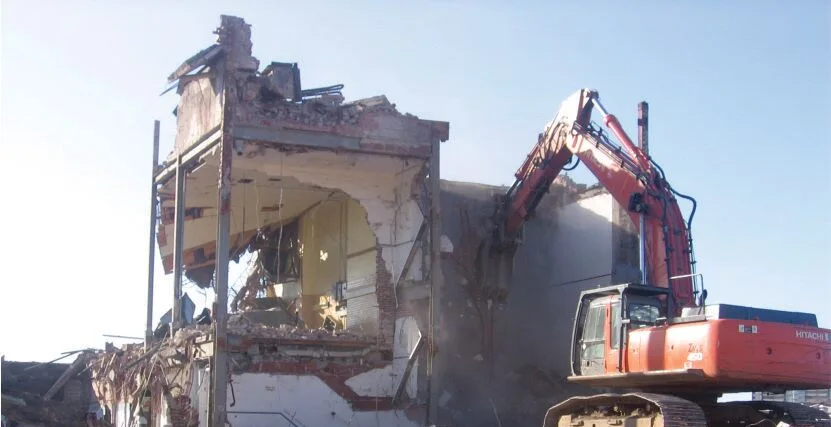
The Saint John YMCA-YWCA decommissioning (2007 to 2008, for the NB Department of Supply and Services) is a complete brownfield arc on one site. Our environmental team began with a hazardous materials survey of the building, identifying asbestos, PCB light ballasts and lead paint, then provided air monitoring through abatement. An underground storage tank had impacted soil and groundwater, which was remediated, and the file was carried through to regulatory closure. The cleared, closed site became the Saint John Justice Complex. Read the case study: Saint John YMCA-YWCA decommissioning.
When Saint John Energy built its headquarters in west Saint John with BGHJ Architects (2006 to 2008), the site was a former brewery. The Phase I ESA established the environmental starting point before design, and the same firm then delivered the mechanical and electrical design and construction management, so the environmental findings fed directly into the building. Read the case study: Saint John Energy headquarters.
A third example, without a dedicated case study page, is the McKnight Motors site, a former dealership that was carried to closure as a risk-managed site rather than fully excavated. That work earned an ACEC-NB Environmental Engineering Excellence award in 2011, a useful reminder that risk management done properly is recognized as good engineering, not a shortcut. Site assessment, remediation and risk assessment are core services of our environmental team.
What brownfield buyers should do before closing
- Get the full site file from the department and every past ESA, RAP and monitoring report.
- Have a Site Professional tell you which tier and which approach are realistic for your intended use.
- Price both paths, including long-term obligations, against the discount on offer.
- Confirm the intended use is compatible with likely institutional controls.
- Coordinate the geotechnical investigation with the Phase II drilling; the same boreholes can answer both questions. See what a geotechnical investigation tells you.
- Build the 365-day and two-year deadlines into your schedule, and ask for extensions in writing before you need them.
The bottom line
A brownfield is a site with a documented path to closure, not a site with a permanent problem. The Atlantic RBCA tiers and New Brunswick’s guideline give you two legitimate routes, remediation and risk management, and the right one depends on what you plan to build. Engage a Site Professional before you buy, choose the tier deliberately, and the Record of Site Condition at the end becomes an asset rather than a liability.
Key takeaways
- Dig-and-dump is one option, not the default; risk management with engineered and institutional controls is an accepted path to closure in New Brunswick.
- Atlantic RBCA has three tiers of increasing site specificity, and moving up a tier often reduces the volume you have to remove.
- Since August 2024, New Brunswick's Contaminated Sites Regulation sets deadlines: an ESA report within 365 days of designation and remediation within two years, unless the Minister extends them.
- Closure comes in two flavours: unconditional (criteria met) and conditional (controls must be maintained), and the choice affects resale and financing.
- A Site Professional with the right qualifications and insurance is mandatory on designated sites, and they certify the Record of Site Condition.
Questions we get asked
What is the difference between remediation and risk management at a contaminated site?
Remediation removes or treats the contamination so that concentrations meet the screening criteria for the intended land use. Risk management leaves some contamination in place and controls the pathways by which people or the environment could be exposed, using engineered controls such as paved caps or vapour barriers and institutional controls such as restrictions on wells or excavation. Both can lead to regulatory closure in New Brunswick.
What is a Record of Site Condition in New Brunswick?
A Record of Site Condition (RSC) is the summary document a Site Professional certifies and files with the Department of Environment and Local Government alongside the Closure Report. It records what was found, what was done, what remains and any conditions that apply. The department reviews it and, if satisfied, closes the file and notifies the responsible party in writing.
Who can act as a Site Professional in New Brunswick?
Under the Contaminated Sites Regulation, a Site Professional must be a member, licensee or certificate holder in good standing under the Engineering and Geoscience Professions Act with at least five years of relevant experience, and must carry professional liability insurance of at least $2 million per claim and in aggregate. The Site Professional is accountable for all environmental work on the site, including work by subconsultants.
How long does it take to close a contaminated site file?
It varies with the contaminant, the volume and the chosen approach. Simple petroleum sites with excavation can close within a year; sites that need groundwater monitoring to prove a plume is stable take longer because several rounds of sampling are required. The 2024 regulation expects the ESA within 365 days and remediation within two years of designation, with extensions available in writing from the Minister.
Can I get a mortgage on a risk-managed site?
Often yes, provided the closure is documented and the conditions are clear and maintainable. Lenders want to see the Closure Report, the Record of Site Condition, the department's closure letter and a plain description of any ongoing obligations. Sites with unconditional closure are simpler to finance; conditional closures are workable when the controls are inexpensive to maintain and compatible with the planned use.