Short answer
A pre-blast survey documents the existing condition of buildings, wells and structures near a blast site before any explosives are used, so later damage claims can be checked against a record. Blast vibration monitoring then measures ground vibration (peak particle velocity) and air overpressure at nearby structures during blasting to confirm each shot stays within limits, typically 12.5 mm/s at low frequencies and 128 dB for air blast in Atlantic Canadian by-laws.
Your site has rock where the foundation needs to go. The excavation contractor has priced blasting, the schedule depends on it, and there are houses within sight of the property line. What happens next determines whether blasting is a two-week line item or a two-year argument.
What is a pre-blast survey?
A pre-blast survey is a documented inspection of structures near a blast site before any explosives are used. An inspector walks each property with the owner’s permission, photographs and describes the condition of foundations, walls, ceilings, chimneys, windows, driveways and retaining walls, notes every existing crack and defect, and in many cases tests wells for water quality and yield. The result is a dated record that the owner, the contractor and the neighbour all receive.
Its purpose is simple. Houses have cracks. Most of them were there long before anyone drilled a blast hole. Without a survey, there is no way to tell an old crack from a new one, and the burden of proof tends to land on whoever set off the explosives. With a survey, both sides have the same evidence.
What is blast vibration monitoring?
Monitoring measures what each blast actually does at the nearest structures. A seismograph with a ground-mounted geophone and a microphone records two things:
- Ground vibration, reported as peak particle velocity (PPV) in millimetres per second, together with its dominant frequency.
- Air overpressure (air blast or concussion), reported in decibels on a linear scale.
Both are compared with the limits in the governing by-law or permit. The records are kept for every shot, and any exceedance is reported with an explanation and corrective action. Monitoring is not just a compliance exercise; a blast designer uses the readings to adjust charge weight per delay, timing and stemming so the next shot stays in bounds without being needlessly small.
What vibration limits apply in Atlantic Canada?
There is no single national limit, so the numbers come from provincial codes and municipal by-laws. Two regional examples we work with regularly:
| Requirement | NB Blasting Code (Reg. 89-108, quarries, adopted by municipal by-law) | Halifax Regional Municipality By-law B-600 |
|---|---|---|
| Ground vibration limit | 1.25 cm/s (12.5 mm/s) peak particle velocity | 12.5 mm/s at 15 Hz or less, rising by frequency band to 50 mm/s at 40 Hz or greater |
| Air overpressure limit | 128 dB | 128 dB (linear) |
| Pre-blast survey | If required by the inspector; distance set by inspector based on geology and charge weight | Every structure within a scaled distance of 32 m/kg^1/2 of the blasting area; wells tested before and after |
| Notification | Owners within 90 m of the site told the scheduled time; audible warning before each blast | Residents within at least 300 m notified in writing at least four days before blasting starts |
| Monitoring | Measurements at locations designated by the inspector | Qualified monitor at the nearest structure for every blast, unless scaled distance exceeds 45 m/kg^1/2 |
| Other | No blasting 7 p.m. to 7 a.m. where a quarry is within 600 m of a residence | Weekly reports to the inspector; exceedances reported within 24 hours |
The frequency-based approach in Halifax’s by-law follows the U.S. Bureau of Mines research of the late 1970s and early 1980s, which found that low-frequency vibrations (which houses respond to most) need tighter limits than high-frequency ones. Many jurisdictions in Canada and New England use a similar structure. Always confirm the current by-law with the municipality; these documents get amended, and construction blasting in a town that has not adopted a code may be governed by permit conditions instead.
How does the process work on a real project?
- Confirm the rules. Identify the municipal by-law or permit conditions, the limits, survey distance, notification requirements and hours.
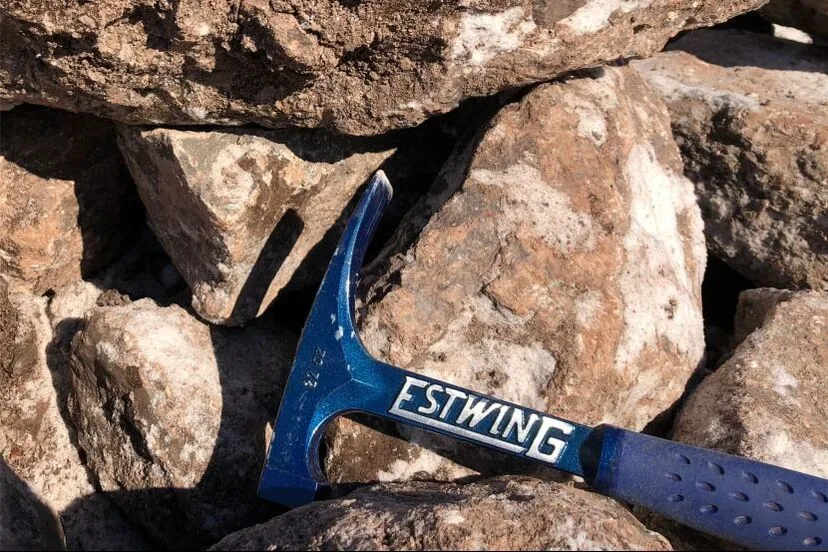
- Know the rock. A geotechnical investigation tells the blast designer how deep and how fractured the rock is. That drives hole pattern, charge weights and how far vibration will travel.
- Blast design. Set charge weight per delay, timing and stemming so predicted PPV at the nearest structure sits comfortably under the limit. Scaled distance calculations are the starting point; site-specific attenuation from the first test shots refines them.
- Pre-blast survey. Document every structure and well in the survey zone, with owner permission, before the first shot. Give copies to the owners.
- Notify. Written notice to residents in the zone, plus contact information for questions and complaints. Most complaints come from people who were surprised, not from people who were harmed.
- Monitor every shot. Seismograph at the nearest structure (and often at more than one), with records retained.
- Review and adjust. Compare readings with predictions after each blast and tune the design. If a reading approaches the limit, change the plan before the next shot, not after a complaint.
- Close out. Post-blast inspections on request, well retests where required, and a monitoring report that stands on its own if a claim arrives a year later.
Why does this protect your schedule, not just your neighbours?
Blasting stops when a complaint turns into a stop-work order, a municipal inquiry or a lawyer’s letter. A clean record of surveys and seismograph readings is what keeps the job moving. It lets the owner and the municipality answer “was it the blasting?” with data on the same day. It also lets the blast designer be efficient. Without monitoring, the only safe assumption is a small, cautious shot, which means more shots and more days. With monitoring, the design can be tuned to the limits.
There is a related benefit for existing rock slopes and walls on or near the site. Vibration that is safe for a house is generally safe for a sound slope, but a slope already loosened by freeze-thaw is a different matter. If you have one nearby, read our guide to rock slope and retaining wall warning signs and have it looked at before blasting begins.
What this looks like in practice
Blast design, control and monitoring have been part of our geotechnical and survey practice since the firm was founded in 1989, including blast control at the Belledune generating station, where the combination of industrial structures and sensitive equipment leaves little room for guesswork.
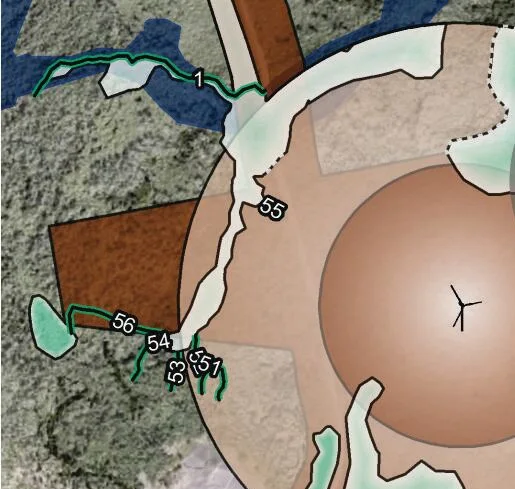
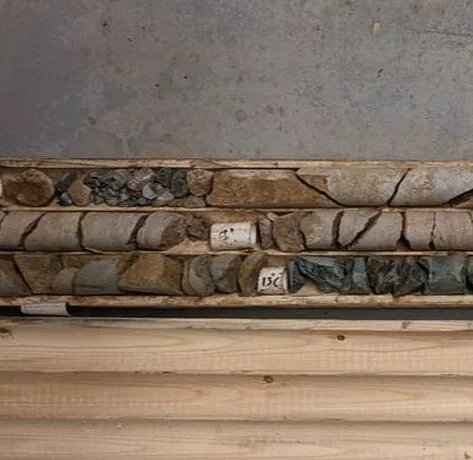
On the Burchill Wind Farm in Saint John, developed by Natural Forces with Saint John Energy, our team’s geotechnical boreholes and test pits across the 1,658 hectare site characterized fractured igneous and volcanic bedrock for 10 turbines totalling roughly 42 to 45 MW. That kind of rock information is exactly what a blast designer needs before planning foundation and road excavation: how deep the rock is, how broken it is, and how vibration is likely to travel through it.
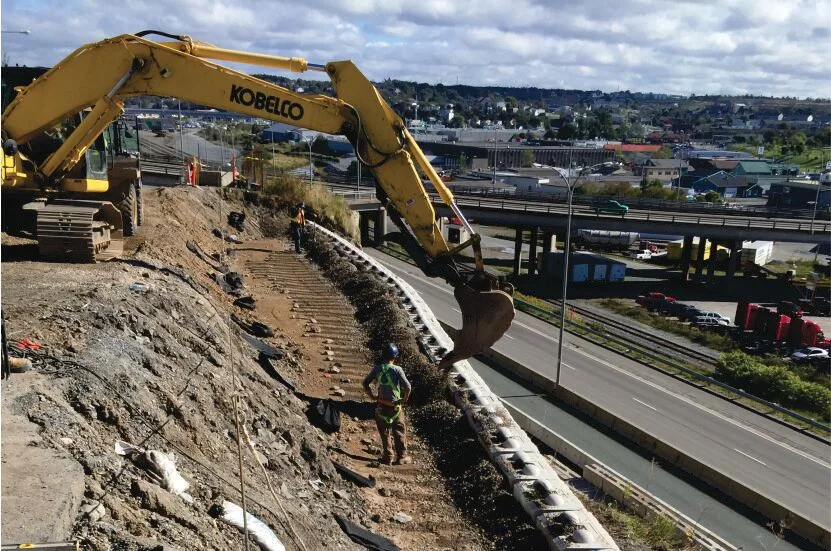
And on Wright Street in Saint John, where a 16 metre rock face failed from freeze-thaw weathering, our 3D survey of about 100 metres of the slope, followed by scaling, rock anchors and a precast Redi-Rock wall, is a reminder of what loosened rock does when nobody is measuring it. Monitoring is cheap insurance by comparison.
The bottom line
Pre-blast surveys and vibration monitoring are the difference between blasting as a routine construction task and blasting as a liability. Document the neighbours’ structures before the first shot, measure every shot at the nearest structure, keep the records, and let the readings guide the design. Done that way, the neighbours are protected, the municipality has its answers, and the rock comes out on schedule.
Key takeaways
- A pre-blast survey is a dated, photographed, written record of existing cracks and defects in nearby structures; without it, every old crack becomes your crack.
- Vibration limits in the region are built around peak particle velocity, with 12.5 mm/s at low frequencies and higher allowances at higher frequencies, plus a 128 dB air overpressure limit.
- Municipal by-laws in Atlantic Canada vary in survey distance, notification distance and monitoring rules, so check the local by-law before mobilizing.
- Seismograph records at the nearest structure are your evidence; they also let a blast designer tune charge weights to stay in compliance without slowing the job.
- Blast design, pre-blast surveys and monitoring done by the same engineering team close the loop between what is planned, what is measured and what is defended.
Questions we get asked
How far from a blast site should a pre-blast survey cover?
It depends on the local by-law, the charge weights and the geology. Some Atlantic Canadian by-laws set the survey zone by scaled distance (a formula combining distance and charge weight per delay), while New Brunswick's provincial Blasting Code for quarries lets the municipal inspector set the distance based on rock geology and charge weight. A common practical approach is to survey every structure within a few hundred metres and extend further for sensitive buildings or wells.
What is peak particle velocity and why does it matter?
Peak particle velocity (PPV) is the maximum speed at which the ground moves as a blast vibration passes, measured in millimetres per second. Research going back to the U.S. Bureau of Mines showed that PPV, combined with vibration frequency, is the best predictor of whether a vibration can crack plaster or drywall. That is why by-laws set limits in PPV rather than in explosive weight alone.
Can blasting damage my well?
It is possible but uncommon when blasting is designed and monitored properly. Because wells are a frequent source of complaints, many by-laws require water quality and yield testing before and after blasting for wells inside the survey zone. A pre-blast well test is the only way to distinguish a blast-related change from a pre-existing condition.
Who does the pre-blast survey, the blaster or an engineer?
Either can, but an independent engineering firm gives the record more weight if a claim ends up in dispute. The survey should be done by someone with no stake in the outcome, who documents consistently and can later testify to what was observed. Fundy's geotechnical team does pre-blast surveys, blast design and monitoring, and has provided forensic investigation and expert testimony on construction matters.
Does blasting require a permit in New Brunswick?
Explosives use is regulated federally under the Explosives Act and provincially through occupational health and safety rules for the people doing the work. Blasting near neighbours is usually controlled by municipal by-law, which may adopt the provincial Blasting Code (NB Regulation 89-108) for quarries or set its own rules for construction blasting. Check with the municipality before scheduling any blasting.